
All About Purchase Intelligence
We no longer live in a world where every financial decision depends solely on static budgets or manual tracking. As artificial intelligence evolves, so does our relationship with money.
From comparing prices across platforms to flagging subscriptions draining your account, AI is now at the center of consumer decision-making.
At the heart of this transformation is a concept known as purchase intelligence, a powerful, AI-driven system that helps users spend more wisely, optimize purchases, and automate savings decisions in real time.
Whether you are trying to save money on groceries, manage multiple subscriptions, or make big-ticket purchases without regret, purchase intelligence is changing how people shop, save, and spend. It is already reshaping personal finance.
What Is Buying Intelligence?
Buying intelligence is the process of using data, insights, and tools to make smarter purchasing decisions. Instead of buying based on impulse or guesswork, buying intelligence focuses on understanding prices, trends, timing, and value before you spend money.
At its core, buying intelligence looks at factors like price history, demand patterns, discounts, and alternatives. It helps shoppers know whether a price is fair, if it might drop soon, or if a better option exists. For example, buying intelligence can tell you when to buy a product, where to buy it, and how to avoid overpaying.
Many modern shopping tools and AI-powered platforms use buying intelligence to track prices, compare sellers, and send alerts when deals appear. This approach saves time and money while reducing regret after a purchase. Simply put, buying intelligence turns shopping decisions into informed choices rather than guesses.
Purchase Intelligence Platform
A purchase intelligence platform is a technology-driven system that helps consumers make smarter, data-backed buying decisions. Instead of relying on guesswork or endless comparison shopping, a purchase intelligence platform analyzes pricing trends, product history, discounts, and availability to guide users toward the best time and place to buy.
When Beem is added to the picture, purchase intelligence becomes even more practical. Beem integrates AI-powered tools that track prices, surface real-time deals, and highlight savings opportunities across everyday spending categories. This allows users to see whether a price is competitive, wait for a drop, or choose a better alternative before making a purchase.
By combining insights with easy-to-use tools, Beem turns purchase intelligence into action. Users can save money, avoid overpaying, and plan spending more confidently.
In simple terms, Beem helps transform shopping decisions from reactive purchases into informed, intentional choices powered by purchase intelligence.
What Is Purchase Intelligence?
Purchase intelligence refers to the use of artificial intelligence, machine learning, and behavioral data to help individuals and businesses make smarter, more cost-effective buying decisions.
It analyzes past spending patterns, current offers, personalized needs, and financial goals to guide better purchasing behavior, often in real time.
This technology goes beyond static budgeting or basic expense tracking. It is proactive, adaptive, and highly contextual. Purchase intelligence solutions use data to answer questions like:
- Is this the right time to buy?
- Is this the best available price?
- Are you overpaying for recurring items?
- Is this purchase aligned with your financial goals?
The result is a smarter spending experience where every dollar goes further and every purchase is optimized for long-term value.
The Core Components of Purchase Intelligence
To understand how purchase intelligence works, let’s break down its key building blocks.
1. Transaction Analysis
AI-powered systems analyze your spending history across categories such as groceries, dining, travel, entertainment, bills, and more. This creates a personalized understanding of where your money goes and identifies spending habits that can be optimized.
2. Real-Time Contextual Feedback
Purchase intelligence doesn’t just report on past behavior. It helps you during the transaction itself. For example, it can prompt:
- Better alternatives
- Lower-cost retailers
- Unused promo codes
- Subscription overlaps or renewals
- Cheaper versions of the same item
3. Dynamic Recommendations
Using pricing databases, retailer APIs, and behavioral data, purchase intelligence engines recommend what to buy, when to buy, and where to buy. It adapts to your budget, preferences, and seasonal trends.
4. Goal Alignment and Forecasting
Your purchases are mapped to your broader financial goals. If you are saving for a car, for instance, the system might flag non-essential spending that puts your goal at risk. This makes everyday spending part of a long-term financial strategy.
5. Spending Optimization Automation
Some platforms go a step further and automate the act of saving or switching to better plans. For example, if your app detects a cheaper phone plan or credit card, it can help you switch with minimal effort.
How AI Is Revolutionizing the Spending Experience
Purchase intelligence is more than just an upgrade. It is a complete shift in how we think about money.
Here’s how AI is driving that change:
1. Predictive Spending Support
AI can forecast your spending behavior before it happens, helping you avoid pitfalls. If you usually overspend on weekends or during holidays, the system can warn you in advance or temporarily tighten controls.
2. Instant Deal Surfacing
No more Googling for promo codes or comparing across multiple apps. Purchase intelligence surfaces the best deals, hidden offers, and cashback opportunities at the time of checkout, online or in-store.
3. Smart Subscription Management
AI detects redundant or forgotten subscriptions and flags them before they renew. Some systems even automate cancellation or suggest cheaper alternatives.
4. Emotional Overspending Alerts
AI can recognize impulsive buying behavior, like midnight Amazon binges or mood-based spending, and alert you with nudges that make you rethink the purchase in real time.
5. Behavioral Coaching and Education
Over time, purchase intelligence platforms help users understand their own triggers, emotional spending habits, and budget weaknesses. This builds long-term financial discipline through behavioral nudges, not restrictions.
Use Case: How Beem Integrates Purchase Intelligence
One of the most advanced implementations of purchase intelligence is Beem, a next-generation financial app designed to help users spend, save, and manage money more efficiently.
Beem goes beyond simple tracking by using AI to deliver real-time guidance, personalized insights, and automated optimizations, transforming the way users interact with their finances.
Here’s a closer look at how Beem applies purchase intelligence to everyday spending:
1. PriceGPT – Real-Time Price Comparison
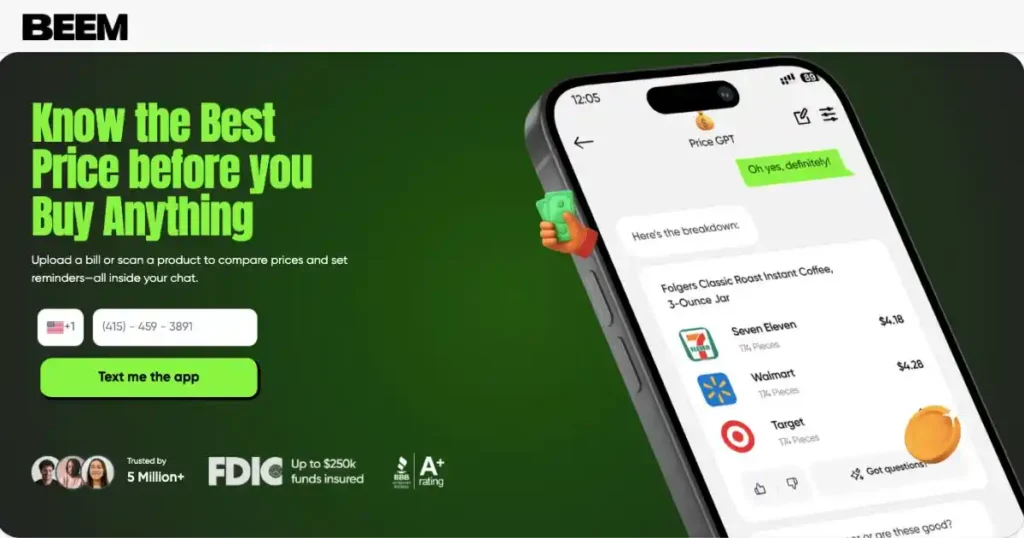
Beem’s PriceGPT allows users to compare prices across multiple retailers, both online and in-store, in real time. Before making a purchase, PriceGPT can identify:
- Lower-cost alternatives for the same product
- Seasonal discounts or flash sales
- Retailers offering better shipping or loyalty rewards
For example, if you’re about to buy a new laptop, PriceGPT can instantly show whether another vendor offers the same model at a lower price, helping you save money without spending hours manually checking websites. By giving dynamic, context-aware suggestions, Beem ensures that every purchase is cost-optimized.
2. DealsGPT – Automated Savings and Rewards
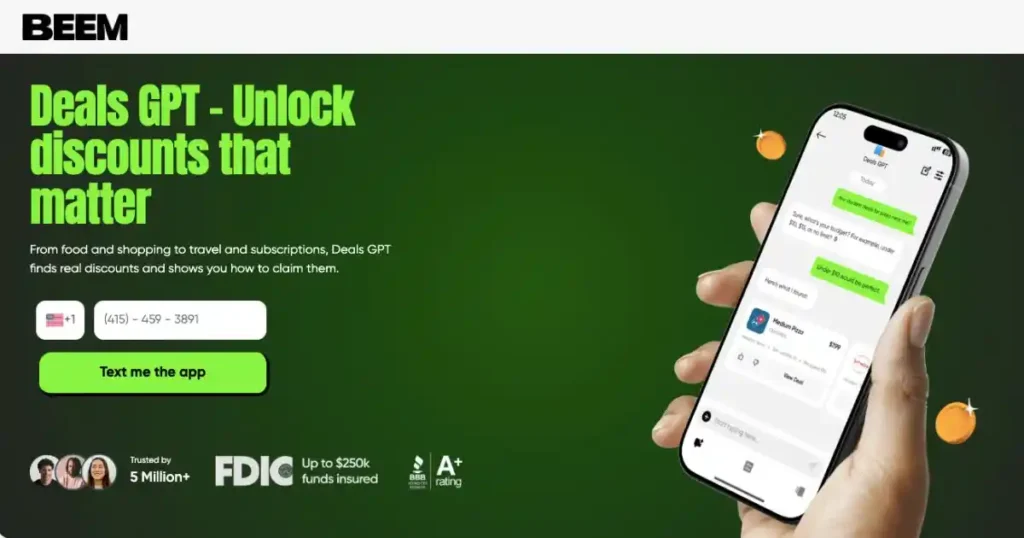
With DealsGPT, Beem identifies coupons, cashback offers, and special promotions during checkout, automatically applying the best options. Users no longer need to search for promo codes or sign up for multiple deal websites.
For instance, if you’re subscribing to a streaming service, DealsGPT can alert you about an available 10% discount or a cashback bonus linked to your payment method. This seamless integration of offers ensures that you never miss a savings opportunity, maximizing the value of every transaction.
3. Smart Wallet – Insightful Expense Tracking
The Smart Wallet feature goes beyond standard expense tracking by analyzing recurring payments, overlapping subscriptions, and spending patterns that could be hurting your budget.
Key functions include:
- Highlighting duplicate services (like two music streaming subscriptions)
- Identifying frequent small purchases that add up over time
- Notifying you of unusually high spending in a category
By visualizing trends and providing actionable alerts, Smart Wallet helps you take control of recurring costs and make informed decisions about where to cut back without feeling restricted.
4. BudgetGPT – Personalized, AI-Powered Guidance
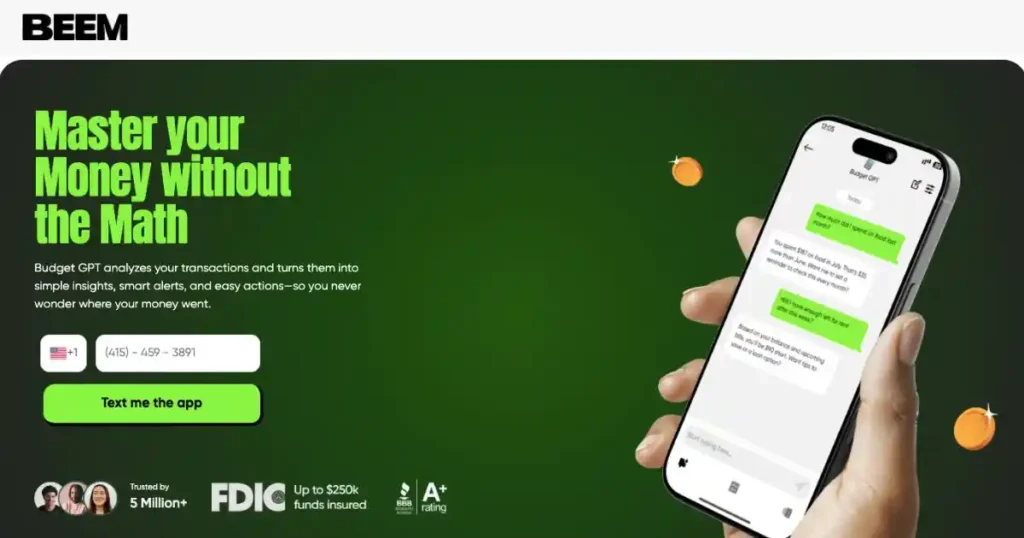
BudgetGPT delivers daily, AI-driven insights that evolve as your spending habits change. Instead of static monthly budgets, BudgetGPT offers:
- Adaptive spending limits based on past behavior and upcoming obligations
- Suggestions to reallocate funds toward savings goals
- Proactive alerts when discretionary spending may impact long-term plans
For example, if you have a vacation planned in three months, BudgetGPT can help adjust your current spending, ensuring you stay on track without unnecessary sacrifices. It turns budgeting into a dynamic, goal-oriented process.
5. AI Alerts – Real-Time Financial Nudges
Beem’s AI Alerts act as a smart financial assistant, notifying users when a purchase might push them over budget or conflict with their savings goals. These alerts can prevent:
- Impulse purchases
- Overspending during high-consumption periods like holidays
- Missed opportunities to save on recurring bills
Instead of waiting for the end-of-month summary, users receive immediate guidance, empowering them to make smarter choices at the point of purchase.
Why Beem’s Purchase Intelligence Is Different
Beem doesn’t just track money, it actively helps users spend less, shop smarter, and grow credit and savings simultaneously. By combining predictive analytics, real-time recommendations, and automated financial optimizations, Beem turns purchase intelligence into a daily financial companion, not just a static dashboard.
Users benefit from:
- Integrated AI tools that work together seamlessly
- Personalized insights tailored to individual financial goals
- Automated optimizations that save time and money without requiring manual intervention
With Beem, purchase intelligence becomes part of your daily life, ensuring that each transaction is strategic, intentional, and aligned with long-term financial well-being.
Why Purchase Intelligence Matters
In a world full of marketing noise, algorithmic pricing, and rising costs, consumers need an edge. Purchase intelligence offers that edge.
It helps:
- Maximize value for every dollar spent
- Avoid common financial traps such as late renewals or high-interest upgrades
- Align spending with long-term goals
- Build better habits through automation and AI coaching
- Reduce cognitive load, decision fatigue, and impulse buys
For individuals trying to save more, pay off debt, or simply take control of their finances, purchase intelligence offers the smart assistant they never knew they needed.
Common Questions Asked About Purchase Intelligence
What is the difference between budgeting apps and purchase intelligence?
Budgeting apps focus on tracking and categorizing your spending. Purchase intelligence goes further by offering real-time advice, proactive suggestions, and smart optimizations during or before a transaction occurs.
Does purchase intelligence work with all types of spending?
Yes. It can help with daily purchases like groceries and streaming subscriptions, as well as larger expenses like electronics, travel, or recurring bills.
Can purchase intelligence help improve credit scores?
Indirectly, yes. By optimizing spending, reducing late payments, and aligning financial behavior with goals, purchase intelligence supports better financial discipline, which contributes to stronger credit habits.
Is purchase intelligence safe and secure?
Reputable apps like Beem use encrypted systems, secure APIs, and privacy-first AI models. Look for platforms that comply with banking standards and do not sell your personal data.
Do I need to link my bank accounts for purchase intelligence to work?
Yes, most systems require transaction data to provide personalized insights. Leading platforms use secure read-only access and encryption to protect your information.
Conclusion: Smarter Spending Is Just the Beginning
Purchase intelligence is not just a feature. It is the future of how we engage with our money. By using AI to analyze spending, suggest smarter options, and connect every purchase to a bigger financial picture, it turns ordinary transactions into strategic decisions.
From optimizing everyday shopping to reducing unnecessary costs, purchase intelligence puts the power of financial clarity into every user’s hands, automatically, affordably, and intelligently.
Apps like Beem are proving that with the right data and the right AI, smarter spending isn’t just possible. It is inevitable.