

Table of Contents
Education costs don’t stop at tuition. For students and families, laptops, software subscriptions, online tools, calculators, headphones, printers, and course materials can quickly add hundreds — sometimes thousands — of dollars to annual expenses.
Back-to-school season, semester upgrades, and software renewals often come with limited time to compare prices. Many end up buying from the first retailer they check, unaware that the same laptop or software license may be available for significantly less elsewhere.
That’s where PriceGPT becomes a smart financial companion for students and families. Instead of manually browsing multiple sites, PriceGPT compares live prices across retailers in seconds, helping you:
- Find the best price for laptops, tablets, and accessories
- Compare course software and subscription costs before renewal
- Detect price spikes caused by seasonal demand
- Identify better-value alternatives that meet academic requirements
When paired with DealsGPT to uncover student discounts and promotional offers — and BudgetGPT to plan education-related spending — families gain both clarity and control.
In this blog, we’ll explore how Beem’s PriceGPT helps reduce education expenses without compromising quality or academic performance.
Why Education Purchases Feel Urgent and Expensive at the Same Time?
Education purchases are often necessary. A semester starts, a syllabus lists required tools, or an enrollment deadline approaches. With fixed timing, decisions must be made quickly, even if prices seem high.
Even waiting for a better price often feels risky, so families and students choose what is available and move forward. The issue is not poor planning; it’s urgency. When time limits limit choices, overpaying becomes more likely.
Read: How PriceGPT Compares Everyday Prices So You Stop Overpaying Without Thinking About It
The True Cost Structure of Modern Education Beyond Tuition
Tuition often grabs the spotlight, but it’s just one piece. Devices, software, and required tools quietly shape the real cost of education, and that reality becomes clearer here.
Hardware as a Gatekeeper to Learning
Laptops, tablets, and accessories are now essential for most programs. Course software usually requires specific specs or operating systems, which limit options. Recommendations from institutions push families toward pricier devices to avoid compatibility issues.
Software and Platforms That Charge Per Term or Per Feature
Many learning platforms use subscriptions or tiered pricing. Design tools, coding environments, and exam software are often charged by semester or feature. These costs repeat quietly and add up over time, even when usage seems low.
Tools That Are Required but Rarely Compared
Calculators, lab equipment, adapters, and other tools are often purchased quickly. Urgency and few alternatives limit comparison, so students pay what is needed to keep up.
Introducing Beem’s PriceGPT for education-focused spending decisions.
Beem’s PriceGPT works as a decision-support layer rather than a budgeting system. It does not tell students or families what to buy and helps them see prices clearly when choices still exist.
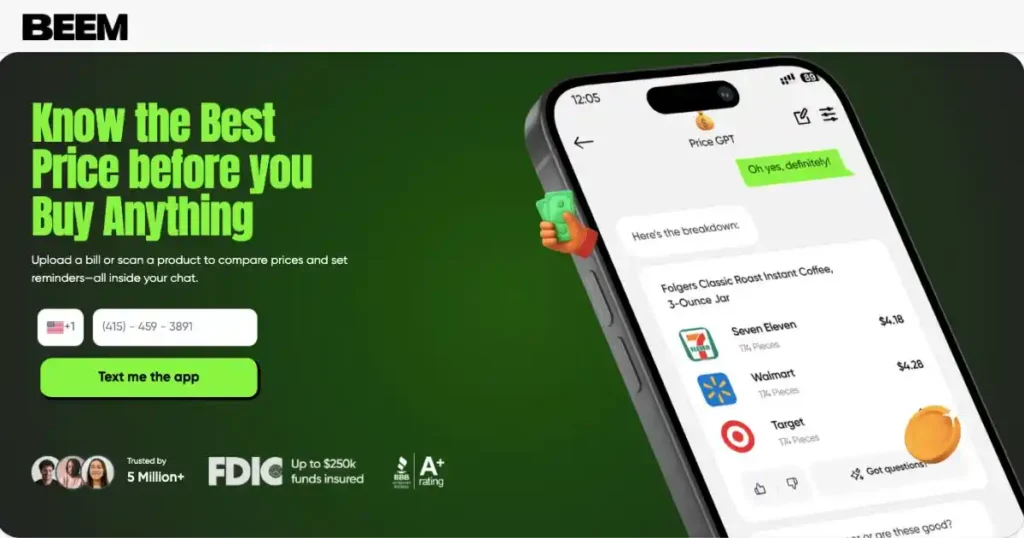
PriceGPT helps users compare product prices across stores by scanning receipts, uploading product information, or pasting product links. This makes price differences visible without extra effort.
How PriceGPT Fits Into the Academic Purchase Timeline?
Education spending follows a clear rhythm tied to semesters and deadlines. PriceGPT fits into those moments naturally, helping decisions feel calmer before urgency takes over, and that becomes clear here.
Before the Semester Starts
Before classes begin, required laptops, software, and tools are listed with firm deadlines. Families use PriceGPT during this window to compare options early, spot price differences, and avoid back-to-school markups before choices become locked.
During the Term When New Requirements Appear
Mid-semester needs often arrive without warning. A new program is required, or a tool becomes necessary for an assignment. PriceGPT quickly compares prices, helping you avoid overpaying during last-minute buys.
Between Terms and Renewal Periods
Breaks offer space to review renewals and upgrades. PriceGPT helps evaluate license extensions, software updates, and device replacements without pressure, allowing for thoughtful decisions before the next term begins.
By aligning with academic milestones, PriceGPT supports education spending at the right moments. Decisions feel more controlled because price awareness matches the natural flow of the school year.
How PriceGPT Compares High-Stakes Education Purchases?
Education purchases carry more weight because mistakes last longer and cost more. PriceGPT focuses on context and timing, not just labels, and that deeper comparison becomes useful here.
Comparing Device Prices Across Sellers and Timing
PriceGPT shows how the same laptop or tablet is priced at different sellers and over different weeks. Back-to-school prices are often higher. Seeing these gaps helps families avoid paying more due to timing pressure.
Evaluating Software Costs Across Plans and Versions
Uploading software details reveals price differences among student plans, bundles, and full licenses. What seems like a deal may not meet actual needs. Comparison helps choose the right version without overspending.
Learning From Past Purchases Through Receipt Scanning
Scanning past receipts shows where higher prices were paid before. This history offers perspective. It helps students and families adjust future purchases to avoid repeating costly decisions.
By combining timing, options, and experience, PriceGPT clarifies complex education purchases.
Avoiding Common Overpayment Traps in Education Spending
Education purchases often happen under pressure. Deadlines loom, and requirements seem fixed. This rush leads to most overpayments, not poor judgment. Recognizing these moments helps make smarter choices.
Institution-Recommended Doesn’t Always Mean Best Price
Schools recommend vendors they know and trust. This familiarity helps students act quickly, but it can result in higher prices. Checking other sellers often reveals the same product at a lower cost without losing compatibility or approval.
Limited-Time Academic Discounts That Mask Higher Base Prices
Academic discounts create a sense of urgency. They seem helpful when time is tight. However, some discounted prices start higher than the market average. Comparing options can confirm if the deal truly saves money.
Check this out: How PriceGPT Integrates with DealsGPT for Maximum Savings?
PriceGPT vs Traditional Student Discounts and Campus Deals
Student discounts and campus deals have real value, but they do not always tell the full pricing story. PriceGPT adds another layer of clarity, and that difference becomes useful here.
Why Discounts Do Not Always Equal the Lowest Price
A student discount can look appealing while still costing more than similar options elsewhere. Some deals are based on higher base prices or limited vendors. Without comparison, a reduced price can still mean overpaying.
How Price Comparison Adds Context to Discounts
PriceGPT helps check whether a discounted offer is truly competitive. Comparing prices across stores or plans shows if a deal stands up or if a better value exists. This keeps discounts useful, not misleading.
How Families and Students Use PriceGPT Together?
Education purchases often require teamwork, especially when costs are high and timing is tight. PriceGPT helps families and students explore options together, easing the pressure of decision-making.
Parents Supporting Big Purchases Without Guesswork
When a laptop or device is needed for a course, families use Price GPT to check prices calmly. Comparing options across stores helps them assess value, timing, and cost. This reduces stress and leads to confident choices.
Students’ Learning Cost Awareness Early
Using PriceGPT during their education fosters practical awareness. Students learn to pause, compare, and make confident decisions. These habits will influence their future spending behavior.
When families and students share visibility, decisions feel balanced. Price GPT encourages clear discussions about education costs, making choices feel thoughtful instead of rushed or uncertain.
Long-Term Impact of Smarter Education Spending Decisions
Education spending choices often seem temporary, but their effects last much longer. When we understand prices early, those decisions shape our finances beyond the classroom. Here’s how it impacts us in the long run: Here is the long-term impact:
Reducing Debt and Financial Stress
By avoiding overpayment, the need for credit cards or payment plans is reduced. When education costs remain reasonable, financial pressure stays low. This helps manage rent, expenses, and unexpected demands with less stress.
Building Smarter Buying Habits for Future Careers
Price awareness learned during education carries into professional life. Comparing costs, questioning urgency, and choosing value become habits. These habits support better decisions around work tools, training, and career investments over time.
Over the long run, smarter education spending builds confidence as much as savings. Clear choices today create steadier finances tomorrow, helping learning and work move forward without unnecessary financial weight.
Who Benefits Most From Using PriceGPT for Education Expenses?
Education spending varies by learner, but in some situations gain more from price awareness. Here’s how different groups benefit from using PriceGPT:
- College Students
- Certification Learners
- Career Switchers and Upskilling Adults
- Online Course Takers
In these cases, the main benefit is clarity, not limitation. When education costs are clear, decisions are easier. This keeps learning focused and reduces financial stress.
This may interest you: What Is JobsGPT and How It Helps You Find the Right Job
Final Thoughts: Education Should Be an Investment, Not an Overpayment
Education is an investment — but overpaying for required tools doesn’t have to be part of the cost.
With PriceGPT, students and families can compare prices for laptops, software, and learning tools before making a purchase. Avoiding even small markups across multiple items can result in significant semester-wide savings.
Add extra discounts through DealsGPT and structured planning with BudgetGPT, and education spending becomes strategic instead of reactive.
And if back-to-school costs arrive all at once, Beem’s Instant Cash Advance provides short-term flexibility without overdraft stress — helping families manage timing gaps responsibly.
Smart education spending isn’t about cutting corners — it’s about paying the right price for the right tools.
Download the Beem app today from the Apple App Store or the Google Play Store and let Price GPT help you stay ahead of rising education costs — one smarter purchase at a time.
FAQs
Can PriceGPT accurately compare student software licenses?
Yes. Uploading software details reveals pricing differences across student plans, bundles, and standard licenses, helping users choose options that match both requirements and value.
Is PriceGPT useful for both online and in-store education purchases?
Yes. PriceGPT supports receipt scanning for in-store purchases and link uploads for online tools, creating consistent price awareness across both environments.
Does PriceGPT replace student discounts?
No. PriceGPT complements discounts by verifying value. It helps confirm whether a discounted price truly competes with available alternatives.
Can parents and students use PriceGPT together?
Yes. Shared visibility supports informed discussions, allowing families to evaluate education purchases collaboratively rather than relying on assumptions.
Is PriceGPT only for big purchases like laptops?
No. PriceGPT also helps evaluate accessories, tools, and recurring software costs, where small overpayments often accumulate quietly over time.