


Table of Contents
Consumer decision-making has changed dramatically over the past decade. Today’s shoppers have access to more products, more brands, more reviews, and more pricing information than ever before. While this abundance of choice creates opportunities, it also introduces a new challenge: information overload.
From comparing prices and evaluating reviews to tracking discounts and identifying the best time to buy, consumers are often required to process large amounts of information before making even routine purchasing decisions. As a result, shopping can become time-consuming, confusing, and prone to costly mistakes.
This is where AI and purchase intelligence are reshaping the future of consumer behavior.
Purchase intelligence combines artificial intelligence, data analytics, pricing insights, and behavioral analysis to help consumers make more informed decisions. Instead of manually researching every option, shoppers can receive personalized recommendations, real-time price comparisons, spending insights, and predictive guidance tailored to their specific needs and financial goals.
The value extends far beyond convenience. AI helps consumers understand not only what to buy, but also when to buy, where to buy, how much to spend, and whether a purchase truly aligns with their priorities. By transforming vast amounts of data into actionable insights, purchase intelligence enables smarter, faster, and more confident decision-making.
The goal is not replacing human judgment. It is enhancing it with better information, greater context, and more personalized financial guidance.
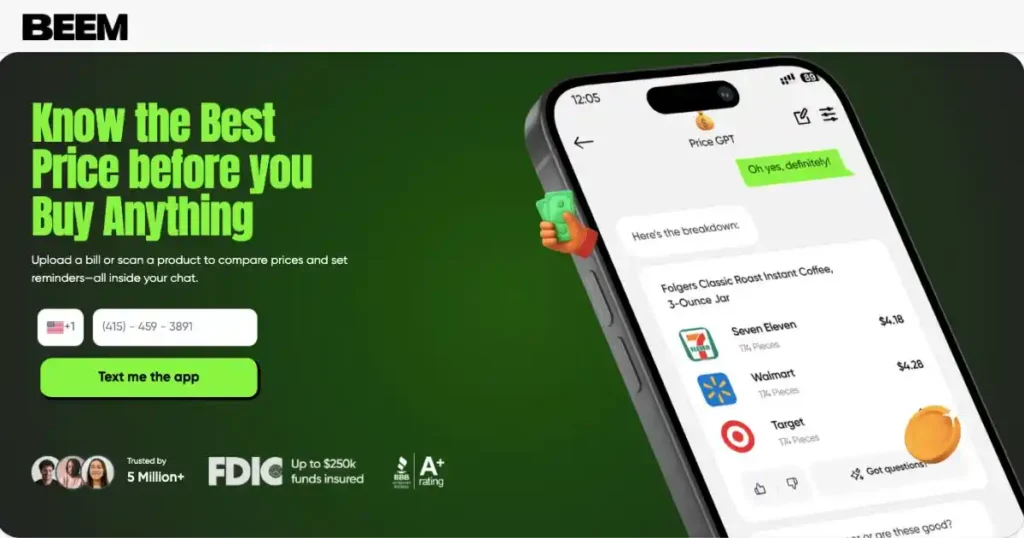
With PriceGPT from Beem, users can access AI-powered purchase intelligence that helps compare prices, identify savings opportunities, and make more informed purchasing decisions. Combined with BudgetGPT for spending management, JobsGPT for improving financial flexibility, and DealsGPT for personalized savings opportunities, Beem helps consumers navigate an increasingly complex marketplace with greater confidence and control.
Why Consumer Decision-Making Needs a New Approach?
With more information available than ever, consumers face a unique problem. The volume of choices does not make decisions easier. It often makes them harder.
Large retailers, subscription companies, and online marketplaces make constant changes to pricing, promotions, and product availability. Consumers rarely have the time or knowledge to keep up.
Here are the biggest challenges shoppers face today.
Too many choices
Online shopping offers countless product variations. Even simple items like phone chargers or water bottles come in hundreds of versions. Deciding between them becomes overwhelming.
Constant price fluctuations
Retailers change prices throughout the week or even the day. A product that costs twenty dollars at noon might cost sixteen dollars by evening. Most consumers never know when they are overspending.
Hidden fees and upsells
Many purchases include add-on fees that appear only right before checkout. Subscriptions renew silently. Delivery charges increase based on time of day. These unexpected costs add up.
Misleading promotions
Not all deals are real deals. Some discounts look impressive but offer no real savings once compared with typical prices.
Limited awareness of spending impact
People buy items without seeing immediate budget consequences. By the time they review their monthly statements, it becomes difficult to understand where money was wasted.
Purchase intelligence solves these issues by analyzing choices the moment they arise and guiding users toward the smartest path.
Read: How AI Helps You Simulate “What If” Scenarios Before Making Big Money Decisions
What Purchase Intelligence Really Means?
Purchase intelligence is the use of AI to interpret spending behavior, compare prices, track patterns, and predict outcomes. It gives consumers instant clarity about what they are buying, how much it costs compared to alternatives, and whether the purchase supports long-term financial goals.
At its core, purchase intelligence includes several capabilities that work together to enhance every part of the shopping process.
Real-time price analysis
AI compares prices across retailers and highlights the true value of a product. It also identifies price trends so shoppers can decide if they should buy now or wait.
Personalized spending insights
AI learns from a consumer’s habits, budget limits, and financial goals. It uses this information to tailor recommendations around saving, spending, and timing.
Subscription tracking
Purchase intelligence identifies recurring charges, flags price increases, and alerts users before renewals happen.
Behavior analysis
Every transaction reveals patterns. AI translates these patterns into insights that help consumers break bad habits and build healthier ones.
Predictive decision support
Instead of showing static prices or outdated budgets, AI forecasts how a purchase will affect future spending, savings, and financial stability.
How AI Powers Purchase Intelligence Behind the Scenes?
While consumers see a simple interface, AI performs several complex tasks in milliseconds. These tasks work together to help shoppers make informed decisions.
Transaction identification
The moment a purchase occurs, AI categorizes it accurately. It identifies whether the transaction relates to groceries, transportation, bills, subscriptions, or discretionary spending.
Pattern recognition
AI studies long-term behavior. It understands spending cycles, seasonal habits, and purchase preferences. When behavior shifts, it highlights the change.
Marketplace analysis
AI scans online marketplaces and price databases to compare offers. It checks historical pricing, competitor rates, and seasonal changes.
Predictive modeling
AI predicts future costs, budget impacts, expected renewals, and likely price changes. It prepares consumers for what will happen, not just what already happened.
Recommendation generation
Based on all available data, the system suggests when to buy, when to wait, where to find deals, how to reduce waste, and what to avoid.
Risk detection
AI identifies unusual transactions, duplicate charges, or suspicious activities that might indicate fraud.
These capabilities allow consumers to make confident, data-supported decisions within seconds.
How AI and Purchase Intelligence Shapes Everyday Shopping Behavior?
Purchase intelligence is changing the way people evaluate products, manage budgets, and approach financial choices. Here are the most noticeable improvements consumers experience.
Faster decisions with less stress
Consumers no longer need to search multiple sites, read reviews for hours, or analyze price charts manually. AI handles the research and presents clear insights in seconds.
Better alignment with financial goals
AI shows how each purchase affects budgets and savings. The more informed the shopper, the easier it becomes to stay aligned with long-term goals.
Reduced impulsive spending
Real-time visibility encourages thoughtful decisions. When AI highlights unnecessary purchases or better alternatives, consumers develop healthier buying habits.
Higher savings through smarter choices
Price comparisons, deal alerts, and waste identification help shoppers save money they might not have realized they were losing.
Improved awareness of subscriptions and renewals
Subscriptions are a major source of hidden expenses. Purchase intelligence ensures nothing goes unnoticed.
Read: How AI Helps You Simulate “What If” Scenarios Before Making Big Money Decisions
The Future of Consumer Decision-Making: Where AI Is Taking Us
Technology will continue evolving, and purchase intelligence will expand far beyond what we see today. Here are the key developments expected in the coming years.
Hyper personalized shopping experiences
AI will understand what consumers want even before they begin searching. It will suggest products based on lifestyle patterns, previous purchases, and budget preferences.
Predictive price alerts
AI will know when specific products are likely to drop in price. Instead of reacting to deals, consumers will receive alerts before discounts happen.
Dynamic budgeting
Budgeting will become flexible, adapting automatically to life changes. AI will not only track spending but guide people on where they should adjust.
Fully automated savings tools
AI will automatically move unused funds into savings, recommend investment opportunities, or allocate money toward goals based on spending trends.
Real-time negotiation tools
AI may negotiate prices with retailers in real time by analyzing coupons, competitor prices, and projected demand.
Voice driven purchase intelligence
Smart home devices and mobile assistants will deliver insights verbally. Instead of checking apps, users will ask questions and receive instant financial answers.
Transparent pricing ecosystems
Retailers will adopt AI powered price consistency tools, making pricing clearer for consumers and reducing the likelihood of hidden fees.
This may interest you: How AI Can Help You Decide Between Saving, Paying Debt, or Spending Today
How Apps Like Beem Are Leading This Future?
Beem is one of the most advanced platforms shaping the direction of purchase intelligence. It combines AI tools that help users stay aware, avoid excessive spending, and find better financial opportunities.
Here is how Beem contributes to the future of decision-making.
PriceGPT
PriceGPT compares prices across platforms and identifies whether a purchase is priced fairly. It studies price history, finds optimal buying times, and helps consumers avoid paying more than necessary.
DealsGPT
DealsGPT locates active deals, coupons, discounts, and cashback options relevant to a purchase. It ensures people do not miss savings opportunities.
Budget GPT
This tool adjusts budgets dynamically based on real-world habits. It predicts overspending and guides users toward smarter financial choices.
Jobs GPT
Jobs GPT gives users ways to increase income by suggesting work opportunities based on their skills and availability.
Smart Wallet
Beem’s Smart Wallet aggregates transactions across multiple accounts and updates consumers instantly. If spending shifts unexpectedly, the system catches it fast.
These combined tools create a complete ecosystem that strengthens consumer decision-making at all stages.
Read: Intelligent Spending When You Have Kids, Pets, and a Tight Budget
How Purchase Intelligence Helps Consumers Compare Options?
Comparison shopping is one of the biggest areas where AI adds value. It improves decisions by simplifying research.
Product comparisons
AI evaluates product features, quality, and value. Instead of reading dozens of reviews, users receive concise breakdowns that highlight the best choice.
Price comparisons
AI compares prices in real time across local stores, online platforms, and sales channels. It prevents consumers from overpaying.
Subscription comparisons
Many consumers pay for overlapping services. AI identifies redundancies and suggests cost effective alternatives.
Usage based comparisons
AI does not only compare prices. It also compares usefulness. For example, if a streaming service gets minimal usage, AI highlights cheaper options that fit better.
This ability to compare intelligently strengthens consumer confidence.
Check this out: How Purchase Intelligence Helps You Compare “Want” vs “Need” in Real Time
How Predictive Analysis Improves Decision-Making?
AI’s predictive abilities may be the most transformative part of purchase intelligence. Consumers benefit not just from what AI knows today but what it anticipates for tomorrow.
Predicting price changes
AI tracks market patterns, seasonal trends, retailer behavior, and historical data to predict when prices might fall or rise.
Predicting renewal costs
Subscription services often increase prices over time. AI tracks these trends and alerts users before they are charged more.
Predicting spending impact
If a consumer continues at the current pace, AI forecasts how much will be left at the end of the month. These predictions help maintain financial stability.
Predicting savings opportunities
AI recommends when to stock up, when to wait, and when to switch brands. This gives shoppers more control over their spending strategy.
Predictive intelligence turns consumers into proactive decision-makers rather than reactive ones.
This may interest you: How AI Can Turn Raw Transaction Data Into Clear, Actionable Money Advice?
Real Use Cases That Show the Power of Purchase Intelligence
To understand the impact of AI on daily financial life, real examples help illustrate the transformation.
Identifying a subscription you forgot you had
A user is charged for a service they signed up for six months ago and never used. AI flags the charge and recommends canceling it. The user saves money immediately.
Notifying a consumer that a product price is about to drop
AI predicts that a laptop will likely drop in price during an upcoming weekend sale. The user waits and saves a significant amount.
Catching a price spike at the grocery store
AI recognizes that a product usually priced at four dollars is now six dollars. It recommends alternatives or different stores.
Alerting users when delivery apps increase fees
If food delivery fees surge based on time or demand, AI notifies the user so they can choose another option or wait.
Finding a better plan for streaming services
AI notices that two streaming services overlap in content. It suggests canceling one and saving money each month.
These situations happen daily. Purchase intelligence transforms how consumers respond.
Read: How to Slowly Move More of Your Financial Life Onto Autopilot With Confidence?
Ethical and Privacy Considerations
AI powered decision-making also comes with responsibilities. Consumers want control over their data.
Purchase intelligence systems must ensure transparency, security, and consent.
Key considerations include:
Data privacy
Users should know what data is collected and why. Platforms must be clear about how they use financial information.
Secure storage
Financial data must be protected through encryption and strict access controls.
User control
Consumers should decide which features to enable and which insights they want to receive.
Bias prevention
AI models must be trained on diverse data sets to avoid skewed recommendations.
By prioritizing these safeguards, purchase intelligence can deliver value without compromising trust.
Read: How Purchase Intelligence Predicts When Prices Will Drop
The Long-Term Benefits of AI Driven Purchase Intelligence
The more consumers use AI powered insights, the more benefits they experience. Long-term advantages include:
Better budgeting habits
Real-time visibility encourages responsible spending.
Higher savings
Price comparisons, deal alerts, and predictive insights help avoid unnecessary costs.
Lower stress
Instant information reduces the anxiety of managing money and makes daily choices easier.
Stronger financial literacy
Understanding patterns and trends teaches consumers how to improve their financial life.
Efficient shopping
Research time decreases because AI handles the heavy lifting.
These benefits compound over time, creating a lasting positive impact on financial health.
Read: How Purchase Intelligence Saves You Money on Travel and Experiences?
Final Thoughts
The future of consumer decision-making will be shaped by the ability to turn data into meaningful action.
As markets become more dynamic and purchasing options continue to expand, consumers will increasingly rely on AI and purchase intelligence to simplify choices, identify opportunities, and avoid costly mistakes. Rather than spending hours researching products and comparing alternatives, shoppers will be able to access personalized insights that support better decisions in real time.
AI-powered purchase intelligence can help consumers:
- Compare products more effectively
- Track prices and discounts
- Predict potential price drops
- Identify wasteful spending
- Optimize subscription costs
- Improve budgeting decisions
- Align purchases with financial goals
The result is a shopping experience that is not only more efficient but also more financially informed.
The greatest advantage of purchase intelligence is personalization. Every consumer has different priorities, spending habits, and financial objectives. AI can adapt to those differences and provide recommendations that are relevant, practical, and tailored to individual circumstances.
With PriceGPT from Beem, users can leverage the power of AI to make smarter purchasing decisions and uncover opportunities to save more over time. Paired with BudgetGPT for financial planning, JobsGPT for expanding income opportunities, and DealsGPT for discovering personalized savings opportunities, Beem empowers users to take control of their financial future through intelligent, data-driven decision-making.
Download the Beem app today from the Apple App Store or the Google Play Store and experience how AI-powered purchase intelligence can help you shop smarter, spend wiser, and build stronger financial habits for the future.






