

Table of Contents
You promised yourself you wouldn’t overspend this month. You meant it. Then Tuesday happened. A stressful afternoon, a quick Target run, a “treat yourself” dinner on the way home, and just like that, the budget is already wobbling and it’s not even the second week.
Here’s the thing: that’s not a discipline problem. That’s a design problem.
The world around you is engineered to make spending easier than saving. Apps use one-click checkout. Stores put impulse items at eye level. Subscriptions auto-renew. Every system you interact with daily has been carefully designed to lower the friction between you and spending. Most budgeting advice responds to this by telling you to try harder. That advice doesn’t work, and it never has.
Behavioral science has known for decades that people don’t overspend because they’re reckless. They overspend because nobody built any guardrails into their environment. The fix isn’t more willpower. It’s a better design. BudgetGPT inside Beem uses behavioral budget nudge theory to build those guardrails directly into your daily spending, quietly and automatically, without turning your financial life into a second job.
Why Willpower Is the Wrong Tool
Think of willpower as a phone battery. You wake up with a full charge and every decision you make throughout the day drains it a little. By 6 PM, after a full day of work, traffic, emails, and a dozen small choices, the battery is nearly empty. That is exactly when most overspending happens, because that’s when resistance is lowest.
Traditional budgeting is built on the assumption that you will track every purchase, categorize every transaction, and compare every number to a limit, all while running on that near-empty battery. It’s a system that demands maximum effort at minimum capacity. No wonder it fails.
Studies consistently show that most budget breakdowns don’t happen from one big reckless decision. They happen from dozens of small, tired ones. The takeout order when there’s food in the fridge. The extra thing was added to the online cart at 10 PM. The subscription renewed without a second thought. The solution to these moments isn’t telling people to try harder. It’s removing the need to try at all.
Read: Beem BudgetGPT for Freelancers and Irregular Income Users
What a Behavioral Nudge Actually Is
A nudge is a small design change that makes the right choice easier without taking away any choices. It doesn’t force anything. It just changes what’s most convenient.
You’ve seen nudges in everyday life. Cafeterias put the salad at eye level and the dessert at the back because most people grab whatever is in front of them. Employers auto-enroll workers in 401(k) plans because people are far more likely to stay in a plan than sign up for one. Neither example forces a decision. Both examples quietly steer behavior by changing what’s easiest.
The same principle applies to money. A well-timed alert, a real number before a purchase, or a visual flag on a category can stop an impulse buy more effectively than any spreadsheet. The nudge doesn’t lecture you. It doesn’t make you feel guilty. It just puts the right information in front of you at the right moment and lets you decide with full awareness.
The Nudges BudgetGPT Uses
BudgetGPT isn’t just an alert system. Each feature is a behavioral nudge built to interrupt the specific moment where overspending typically begins.
- The Safe-to-Spend Number: This is the foundation. Instead of showing your raw bank balance, BudgetGPT shows what you can actually spend today, after subtracting upcoming bills, recurring charges, and your savings goals. A falsely high balance is one of the most dangerous nudges in everyday banking. It tells your brain you have more room than you do. Safe-to-Spend removes that illusion entirely.
- Point-of-Sale Alerts: The moment a transaction clears, BudgetGPT fires a notification while the purchase is still emotionally fresh. Example: “You just spent $80 at Target. That leaves $35 for dining out this week.” This connects action to consequence in real time, something a monthly budget review never does.
- Category Warning Alerts: When you’ve used 80% of your dining budget by the 14th of the month, BudgetGPT tells you now, not on the 31st when it’s too late to change anything. The warning lands while you still have two weeks to adjust.
- New Subscription Detection: The moment a new recurring charge appears on your account, you get an alert. “New charge detected: Peacock Premium. Keep or cancel?” The decision happens immediately, not six months later when you’ve completely forgotten you signed up.
- Spending Pattern Flags: This one catches drift, not just single purchases. If your grocery spending has climbed 18% over the last 60 days, BudgetGPT surfaces that trend before it quietly becomes your new baseline.
The Friction by Design Principle
Not all friction is bad. In financial decisions, a small pause is often the difference between a purchase you’re glad you made and one you regret by morning.
One-click checkout exists specifically to eliminate the pause between wanting something and buying it. That pause, even when it’s just 10 to 15 seconds, is where second thoughts live. Remove it and impulse wins almost every time.
BudgetGPT adds that pause back in through intentional micro-friction. Before a non-essential purchase, you can run the “Can I Afford This?” check. It’s not a lecture. It’s a simple question the app answers in seconds using your real balance, your upcoming bills, and your savings target. The answer comes back as a traffic light.
Timing Is Everything
A spending alert that arrives at the end of the month is almost useless. The money is already gone. The decision already happened. All the alert does at that point is make you feel bad about something you can no longer fix.
A nudge only works when it interrupts the decision loop while the loop is still open. BudgetGPT is designed around three specific windows where nudges land best. The first is before a known high-spend period, like a weekend, a holiday, or the day right after payday when your balance feels flush. A heads-up before these windows helps you go in with a number in mind. The second window is at the point of sale, immediately after a transaction, while the context is still alive in your head. The third is mid-month, when category drift is visible but still reversible with a small adjustment.
The worst financial advice always shows up too late. The best financial system shows up just in time.
Building a Nudge-Friendly Setup Inside Beem
Getting the nudges to work well takes about ten minutes of setup and then almost nothing after that.
- Set your Safe-to-Spend number first. Everything else builds on this. Without an accurate spendable number, the alerts don’t have a real reference point.
- Customize the alert sensitivity to match your personality. Some people need a gentle heads-up. Others need a firm warning to actually pause. Beem lets you choose.
- Build spending categories around your real life, not a generic template. If you spend on youth sports, pet care, or weekend travel, those need their own buckets.
- Assign a traffic light status to each category so you can see your whole month in one glance: Green means on track, Yellow means watch it, Red means stop.
- Set a weekly five-minute check-in inside Beem, not to stress over the numbers but just to confirm the nudges are calibrated and nothing unexpected has crept in.
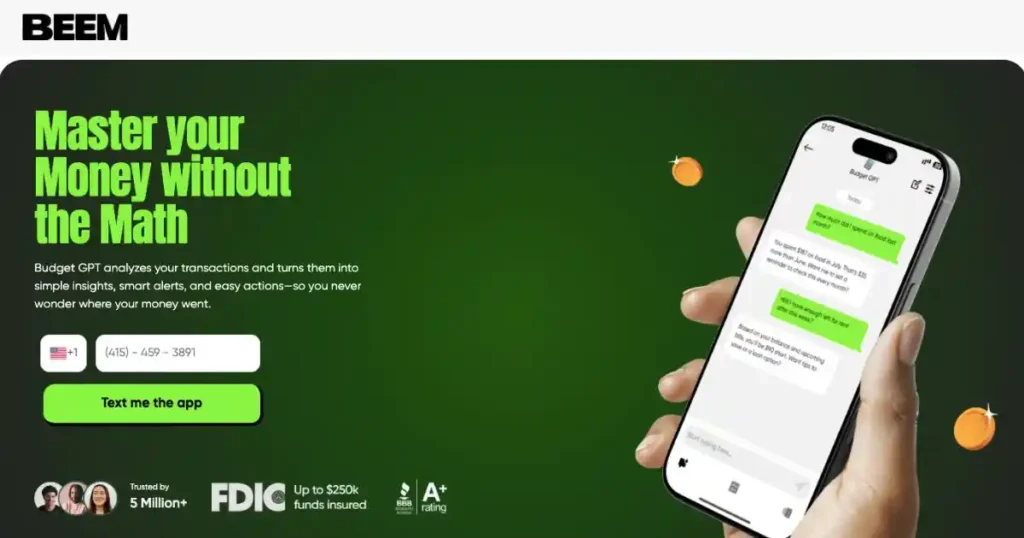
What Happens When the Nudges Don’t Work
Nudges are not a perfect system. A rough week, an unexpected bill, a birthday celebration, any of these can push spending past the limits no matter how well the alerts are set. That’s not a failure of the system. It’s just life.
The goal was never perfection. It was a faster recovery. When you overspend in a category, BudgetGPT shows you exactly where and by exactly how much. That clarity is the first step. From there, the recovery options inside Beem are practical. You can tighten your Safe-to-Spend limit for the rest of the month to make up the ground. If you need to close a bigger gap, JobsGPT can help you pick up a gig shift or two to bring in extra cash quickly. If a bill timing mismatch is about to cause an overdraft before you can recover, Everdraft bridges that gap without interest or a credit check.
A rigid budget punishes you for drifting. A nudge system helps you correct course and keep moving.
What Is Beem and Where Does It Fit?
Beem is an all-in-one financial app built for Americans who want real visibility into their money without spending hours managing it. You can find it at https://trybeem.com.
BudgetGPT is the behavioral layer of the app. It reads your transactions, learns your spending patterns, and delivers the right nudge at the right moment. But it works best as part of the full Beem system:
- Everdraft covers cash gaps up to $1,000 when bill timing and payday don’t line up, with no interest and no credit check
- JobsGPT connects you to gig work quickly when you need to run an income sprint after an overspend
- DealsGPT makes sure that when you do decide to spend, you’re getting the best available price
- Sinking Funds pull irregular expenses like car repairs, holidays, and school supplies out of your monthly stress load by building for them in advance
The system doesn’t make your spending decisions. It makes sure you make them with full awareness, not on autopilot.
The Guardrails Were Always the Point
The problem was never your discipline. It was the absence of a system designed to support good decisions at the exact moment they happen. No spreadsheet reviewed at the end of the month can do that. No guilt trip the morning after changes what already happened.
Behavioral nudges work because they meet you where the decision actually lives, which is right in the moment, when you’re tired, when it’s easy to say yes, when your battery is low. A real-time alert, a true spendable number, and a simple traffic light before a purchase add up to a completely different relationship with money.
Download Beem today from the App Store or Google Play. Staying informed and structured today can make finance management calmer and more predictable.
FAQs: Behavioral Budget
What is a behavioral nudge in personal finance?
A behavioral nudge is a small design change that makes the right financial choice easier without forcing anything. Examples include showing your real spendable balance instead of your raw bank total, or sending an alert right after a purchase while the context is still fresh.
How is BudgetGPT’s Safe-to-Spend number different from my regular bank balance?
Your bank balance includes money that is already committed to upcoming bills, auto-payments, and savings goals. Safe-to-Spend subtracts all of that first and shows you what’s actually available for discretionary spending today.
Can I customize how aggressive the alerts are?
Yes. Beem lets you adjust alert sensitivity based on your personality and goals. You can set gentle nudges for awareness or firm warnings for stricter accountability, depending on what actually motivates you to pause.
What if I get alert fatigue and start ignoring the nudges?
That’s a real risk with any notification system. The fix is to keep the alerts targeted and meaningful rather than frequent. BudgetGPT is designed to alert you at high-impact moments, not constantly, so each nudge carries weight when it arrives.
Do behavioral nudges actually work, or is this just another budgeting gimmick?
The research behind nudge theory is well-established and has been applied in public health, retirement savings, and energy conservation for years. In personal finance, the results are consistent: people who receive timely, contextual spending feedback overspend less than people who review their spending after the fact.
What happens if I overspend despite the nudges?
BudgetGPT shows you exactly where the overspend happened and by how much. From there, you tighten your Safe-to-Spend for the remainder of the month, use JobsGPT to earn back the gap if needed, or lean on Everdraft if a bill is at risk. The system is built for recovery, not just prevention.
Is BudgetGPT right for someone who doesn’t have a strict budget yet?
Yes, actually more so. BudgetGPT doesn’t require you to have a detailed budget in place before it starts helping. It learns from your actual spending patterns, surfaces what’s happening, and builds your awareness gradually. The nudges work even when you’re starting from scratch.