

Table of Contents
“Free returns” sounds like a win for shoppers—but the real cost is often hidden in the price you pay.
Online retailers promote easy, no-cost returns to reduce buying hesitation and increase conversions. It feels risk-free: order now, decide later. But behind the scenes, returns come with real costs—shipping, restocking, inspection, and sometimes even product loss. And those costs don’t just disappear.
They get built into pricing.
That means even if you never return a product, you may still be paying more to cover a system designed for convenience. Over time, these small price increases across everyday purchases can quietly add up—making “free returns” less free than they seem.
The challenge is visibility.
Most shoppers don’t see how return policies influence pricing, so it’s difficult to factor that into buying decisions. This is where a more data-driven approach becomes useful.
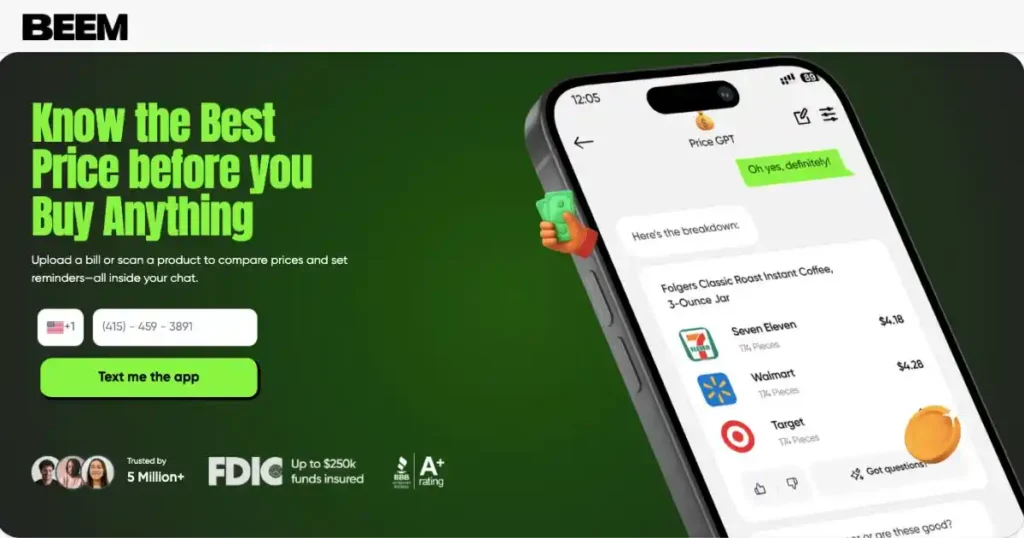
With PriceGPT from Beem, you can compare prices across retailers and identify when convenience-driven pricing might be inflating costs. Combined with BudgetGPT for planning expenses, JobsGPT for increasing income, and DealsGPT for uncovering additional savings, Beem helps you make smarter, more informed purchases.
Why “Free Returns” Are Not Actually Free
Free returns seem like a great deal at checkout, but the costs are hidden. They are built into the product price. Here’s why.
Returns Cost Money to Process
Every return includes shipping, inspection, repackaging, and restocking. These steps require time and resources. These costs don’t vanish; they are added to product prices. So, buyers indirectly pay for returns through higher base prices.
Everyone Pays, Not Just Returners
Costs from returns are shared by all customers, not just those returning items. Even buyers who don’t return products still cover part of these expenses. This system helps businesses manage risk while keeping prices steady.
This may interest you: How AI Can Help You Decide Between Saving, Paying Debt, or Spending Today
What Happens Behind a “Free Return”?
A return may seem simple, but it triggers several costly steps for businesses. Many of these steps are hidden. Here’s what happens behind the scenes:
Reverse Logistics Is Expensive
Returning a product involves sorting, inspecting, transporting, and handling. This process is often more complex than the initial delivery. It takes extra time and resources, making returns costlier than standard shipping.
Not All Returned Items Can Be Resold
Some returned items can’t be resold. They might be open, damaged, or not in perfect condition. This results in losses for businesses, which recoup those costs by adjusting prices on other products.
How Return Policies Affect Product Pricing?
Return-friendly policies often influence pricing structures. This implies that flexibility can be costly. Here’s how it affects the pricing of the product:
Higher Return Rates Lead to Higher Prices
Categories with frequent returns usually hide cost buffers in product pricing. These buffers help businesses cover return-related expenses. This results in slightly higher prices for buyers.
Discounts May Be Offset by Return Costs
Some discounts look appealing, but prices may already include adjustments for return costs. This can lessen the actual value of the deal, making the discount seem less beneficial.
Read: How AI Helps You Simulate “What If” Scenarios Before Making Big Money Decisions
Categories Most Affected by Free Returns
Some products have more returns, and this influences their prices. Here are some of the most impacted categories:
Fashion and Apparel
Clothing can be returned because of size problems, fit, and style problems that are difficult to determine over the Internet. Retailers count on this behavior and adjust pricing to cover return volumes; because of this, consumers may also pay slightly higher prices throughout those categories.
Electronics and Gadgets
The electronic returns are sometimes the result of buyers testing features or comparing options at home. This trial-based conduct will increase handling and processing expenses, which are frequently covered in pricing to control the effect of common returns.
Furniture and Large Items
Large items are costly to ship and return, specifically because of their length and size. Logistics prices are extensively higher, which leads businesses to include these expenses in product pricing.
This may interest you: How AI Can Turn Raw Transaction Data Into Clear, Actionable Money Advice?
When Free Returns Benefit the Buyer?
Free returns may be good as long as they are prudently utilized, particularly when there is uncertainty. Here’s the free return benefit:
When Product Fit or Preference Is Uncertain
Returns matter when size, comfort, or compatibility are hard to predict. This flexibility eases decision-making. Buyers can choose with more confidence, especially for items based on personal taste.
When Trying New Brands or Products
Free returns simplify trying new brands or products without financial risk. This encourages exploration and better discovery, especially when there’s little prior experience.
Using free returns thoughtfully, along with insights from Beem PriceGPT, balances flexibility with overall value and smarter spending.
When Free Returns Can Lead to Overspending?
Free returns appear handy, yet they can influence the purchase behavior and boost the total spending. Little decisions can pay off in the long run. Here’s when free return can lead to overspending:
Buying Multiple Options “Just in Case”
Some consumers purchase multiple varieties of the same product, intending to send back those they do not want. This seems practical but raises short-term spending. It also adds effort for packing, shipping, and tracking returns.
Reduced Price Sensitivity
When returns are easy, shoppers may skip comparing prices. The aspect of convenience may result in a lack of thought and the increased expenses without seeing minor but significant differences.
Read: Switching Banks and Cards: Let PriceGPT Compare Fees, Rates, and Rewards Before You Move
How to Evaluate the True Cost Before Buying?
Looking past the “free returns” label shows the real cost of a purchase. A smart decision considers more than just convenience. Here’s how to evaluate properly.
Compare With Non-Return Options
Some sellers have lower prices but strict return policies. When return flexibility is not of the essence, these options can be more valuable and reduce your overall cost.
Check If the Price Is Higher Than Average
Products with a free return policy may be a little more expensive to cover the cost of returns. Comparison of similar listings will give you an idea whether the price is an indication of additional flexibility or it is merely competitive.
Consider Your Likelihood of Returning
Not all purchases require the ability to make returns, particularly for ordinary products. Customers who do not reuse the products can pay an extra price to get an option that they do not require.
Considering these aspects, and using the Beem PriceGPT can make any choices, which can be considered as the real value, rather than its superficial convenience.
Check this out: The Smart Shopper’s Guide to Finding Deals Online with DealsGPT
Common Mistakes Buyers Make With Return Policies
Most buyers believe that free returns will always add value, but this may give rise to mistakes. Unnoticed expenses are easily concealed without any close examination. Here are some mistakes buyers make:
Ignoring the Built-In Cost
Return policies can affect pricing, yet many buyers miss this. The costs of handling returns usually get factored into product prices. This can cloud true value and lead to paying more than expected.
Treating Returns as Risk-Free
Direct fees may not be charged, but returns require time and effort. Packing, shipping, and awaiting refunds all cost. This implies that it is not a totally free and hassle-free process.
Not Reading Policy Details
Return policies differ in time limits, conditions, and exclusions. A product that is indicated as “free return” can still have restrictions. Examining the details allows one to prevent misunderstandings and ensure that reality and expectations are not mismatched.
How to Use Return Policies Smartly?
Return policies may be helpful if they are used judiciously, but not instead of caution in making decisions. To have a better result, you should use a balanced approach. Here’s how to use return policies
Use Returns for Uncertain Purchases Only
Return-friendly options are best when you do not know how to fit, or even how to be compatible or preferable. This flexibility is not necessary with routine purchases. This can assist you in avoiding paying extra for features you may not utilize.
Balance Price and Convenience
The lowest price does not necessarily mean a good experience. Similarly, the most accommodating one may have its costs concealed. A balanced decision examines the price and convenience to make smarter decisions.
Plan Purchases to Reduce Returns
Looking at product details, specifications, and sizing before purchasing reduces returns. Careful planning assists you in not making irrelevant paths and makes your purchases accurate from the start.
Read: How PriceGPT Compares Everyday Prices So You Stop Overpaying Without Thinking About It
Conclusion
“Free returns” are convenient—but they’re not truly free.
Retailers absorb the operational costs of returns and distribute them across product pricing. As a result, shoppers often pay slightly more upfront, whether they use the return policy or not.
Understanding this shift helps you make better decisions.
Instead of assuming convenience comes at no cost, you can evaluate whether a higher price is worth the flexibility—or if a better-priced alternative exists elsewhere. Small awareness like this can lead to meaningful savings over time.
With PriceGPT from Beem, you can compare prices instantly and identify where you might be overpaying due to built-in costs like returns. Pair that with BudgetGPT for managing spending, JobsGPT for boosting income, and DealsGPT for finding additional savings, and you gain a complete system for smarter financial decisions.
The result is simple:
More awareness, better choices, and greater control over what you actually pay.
Download the Beem app today from the Apple App Store or the Google Play Store and start seeing the true cost behind everyday purchases.
FAQs
Are free returns really free for buyers?
Free returns appear to be free at checkout, yet it is usually included in the price of the product. This means all customers share that expense indirectly.
Do return policies affect product prices?
Yes, return policies impact prices. More flexible policies raise costs for businesses, leading them to adjust prices to cover these expenses.
Should I always choose free return options?
No, it varies depending on the product and the possibility of a refund. Flexibility might not always be worth the additional cost.
Which categories are most affected by returns?
The most impacted are fashion, electronics, and large items. Their rates of return are higher, increasing costs, and affecting product prices.
How can I avoid overpaying due to return policies?
You can avoid overpaying by comparing prices, knowing the conditions of returns, and reducing unnecessary returns. This is to aid in making a value decision.