

Table of Contents
Walk down any grocery or household aisle and you’ll face the same question: Brand name or generic? From cleaning supplies and paper products to pantry staples and personal care items, the price difference between branded and store-brand products can range from small to significant. But cheaper doesn’t always mean better — and higher-priced doesn’t always mean higher quality.
For many households, these decisions aren’t occasional — they’re weekly. Choosing brand over generic (or vice versa) across dozens of items can quietly add hundreds of dollars to your annual spending. The challenge isn’t just picking the lower price; it’s understanding whether the difference reflects real value or just marketing.
That’s where PriceGPT helps you make smarter comparisons. Instead of guessing, PriceGPT analyzes real-time pricing across retailers, helping you compare brand vs. generic options side by side. It highlights price gaps, identifies better-value alternatives, and helps you see where switching to generic delivers meaningful savings — and where sticking with a brand might still make sense.
When paired with DealsGPT to uncover brand-specific promotions and BudgetGPT to ensure your household spending aligns with your financial plan, you gain a clearer framework for everyday buying decisions.
In this guide, we’ll break down how PriceGPT supports smarter brand vs. generic choices — so your essentials don’t quietly inflate your budget.
Why Choosing Between Brand and Generic Feels Harder Than It Should?
When products of similar types are displayed on the same page, it is safer to choose the branded product due to its familiarity. The generic option may offer the same function, yet doubt remains.
Packaging, brand recognition, and shopping habits shape decisions more than product performance. Knowing this makes choosing simpler.
Understanding the Real Difference Between Brand and Generic Products
Brand and generic labels often create assumptions that are not necessarily true. The difference between them lies less in quality and more in positioning and selling the products. Here’s the key difference:
What You Are Actually Paying For With Brand Names
Brand products are usually priced higher due to businesses’ high-visibility investments. The final price is determined by advertising, packaging design, and large-scale distribution. These attempts make the product familiar and trustworthy over time.
The sense of trust may be important, particularly with the things that are frequently in use. Still, higher costs do not necessarily lead to improved outcomes. Many branded household products perform very similarly to cheaper options.
How Generic Products Are Typically Priced
Generic products are priced lower because they simplify things. They have minimal advertising, plain packaging, and fewer processes between the factory and store shelves. This helps to keep the costs low initially.
Low prices do not mean decreased standards; rather, they are a sign of efficiency. In most of the daily categories, generic products are equally sufficient and meet the same requirements.
After such differences are understood, the decision becomes less emotional. Brand and generic choices become clearer when attention shifts from names to what the product actually delivers over time.
Read: How to Slowly Move More of Your Financial Life Onto Autopilot With Confidence?
Where Brand vs Generic Decisions Impact Monthly Spending the Most
Monthly spending rarely shifts because of one expensive purchase. It usually changes in small ways through items picked up again and again. Brand and generic choices fall into this pattern quietly, especially with products that feel routine and familiar. Here’s where those choices most affect monthly spending.
Cleaning Supplies and Home Care Products
Most cleaning products perform similar tasks. The price difference often remains consistent, while performance changes little. Over time, generic options often deliver steady savings without noticeable trade-offs.
Pantry staples and daily consumables
Pantry items move quickly, which makes habits hard to notice. Rice, flour, cooking oil, spices, and packaged foods are often chosen because they look familiar on the shelf. Many times, the difference is not in quality but in branding that quietly adds to the total bill.
Personal Care and Hygiene Essentials
Some personal care products rely on formulation. Sensitive skin or specific needs may justify higher costs. For basic use, generics often work just as well, but the choice often hinges on packaging and brand recognition.
Over time, these repeated choices carry more weight than expected. Knowing where brand choices truly matter helps make household spending feel balanced and manageable.
Introducing Beem PriceGPT for Smarter Household Price Decisions
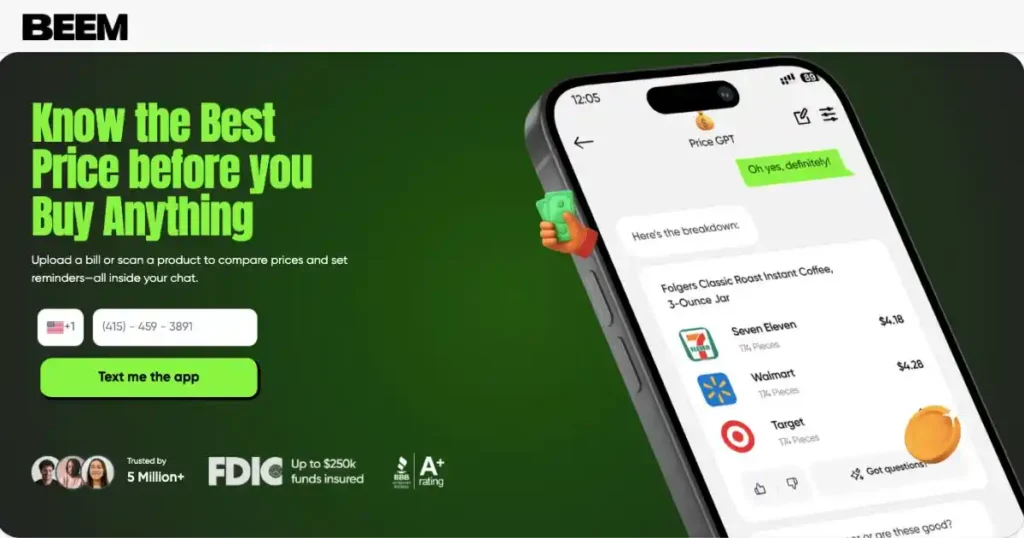
Price decisions are easier with context than impulse. PriceGPT fits well into household planning. It helps users compare prices by scanning receipts, uploading product info, or pasting product links.
Instead of chasing discounts, PriceGPT emphasizes clarity. It shows total spending over time and highlights where small changes matter most.
How PriceGPT Compares Brand and Generic Prices in Real Life?
PriceGPT focuses on real buying habits, not just shelf prices. This makes comparisons feel real and practical. Here’s how PriceGPT works:
Receipt Scanning to Reveal What You Really Paid Over Time
By scanning receipts, PriceGPT tracks actual purchases over weeks and months. It shows how often brands cost more than generics, turning random buys into clear spending patterns that are easy to grasp.
Uploading Product Details to Compare Alternatives
When you upload product details, PriceGPT finds similar generic options without guesswork. It highlights clear price differences between comparable products that serve the same purpose.
Cross-Store Comparison to Identify Consistent Value
PriceGPT compares products across various stores. This shows that brand prices stay high, no matter the location, while generic options remain steady and reliable across retailers.
Read: How PriceGPT Compares Everyday Prices So You Stop Overpaying Without Thinking About It
When Paying for a Brand Makes Sense and When It Does Not?
Not every brand purchase is a waste. Some items need higher standards or safety guarantees. The value depends on the product and its daily use. Here’s how that balance usually appears.
Categories Where Performance Differences Matter
Certain products need extra care. Baby products, skin care products for sensitive skin, and health products require specific ingredients and quality standards. In these cases, spending more can ensure quality, not just a marketing trick.
Categories Where Price Differences Are Mostly Perception
In other areas, branding matters more than performance. Paper goods, basic cleaners, and similar items usually perform the same across brands. Familiar packaging and habits often influence choices more than any real difference in effectiveness.
How PriceGPT Helps You Build a Smarter Generic First Strategy?
Shifting to generics isn’t about a sudden change. It starts with noticing shopping patterns and feeling comfortable with familiar choices. PriceGPT makes these patterns easier to see, helping you build this habit over time.
Identifying Categories Where Generics Deliver the Best Value
PriceGPT shows categories where generics excel. It compares prices and performance over time, making the shift to generics feel gradual and secure, not forced.
Avoiding False Savings and Low-Quality Tradeoffs
Cheapest does not always mean best. PriceGPT helps you spot these cases early by revealing long-term patterns. This way, saving money today won’t lead to frustration later. It prevents short-term savings from becoming long-term costs.
Brand vs Generic Decisions Over Time and Budget Impact
Small choices shape a household budget more than many realize. Picking generic options for daily items may seem minor, but the savings add up over weeks and months.
Eventually, these savings allow for better spending decisions. Money saved from regular purchases can go toward brands that truly matter, like comfort items or durable, quality products.
Check this out: How PriceGPT Integrates with DealsGPT for Maximum Savings?
PriceGPT vs Manual Brand Comparison While Shopping
Comparing brands can seem easy, but little details often influence decisions. Choices that appear to be based on preference are really shaped by product presentation. This is where the difference shows.
Why does in-store guesswork lead to inconsistent decisions?
In stores, products at eye level seem more reliable. Bright packaging grabs attention, and sales suggest better value, even if prices are higher. These signals push for quick choices. Over time, this leads to different decisions each trip, even for the same items.
How AI-Based Comparison Adds Context and Confidence
PriceGPT takes a different approach. It uses real data to compare prices across brands and generics. This removes impulse from the equation. Decisions feel steadier because they rely on patterns, not just presentation.
Both methods have value, but PriceGPT brings clarity where guesswork creates confusion. With better context, brand choices feel more consistent and trustworthy over time.
Who Benefits Most From Using PriceGPT for Household Essentials?
Household expenses may appear easy to manage at first, but they become complicated when you have to make frequent purchases. PriceGPT helps avoid surprises and manage spending better. Here’s who gains the most.
Families managing everyday home needs: Families frequently buy groceries and cleaning supplies. PriceGPT shows how brand and generic options impact spending over time.
People who purchase in bulk: Bulk purchasing appears to be a great way to save money, but the cost can be highly unpredictable. PriceGPT makes it easy to compare bulk options, so savings stay clear and consistent.
Renters sharing household expenses: Living with others means sharing costs. PriceGPT tracks regular purchases and utilities, helping to keep spending fair and balanced.
Read: Why Every Smart Shopper Needs Purchase Intelligence?
Final Thoughts: Smarter Household Spending Is About Knowing Where to Save
Brand vs. generic isn’t about loyalty — it’s about value.
With PriceGPT, you can compare real-time pricing differences across household essentials and see exactly how much you’re paying for a brand premium. Over time, small swaps to generics where quality is comparable can lead to meaningful savings — while strategic brand purchases during promotions can still offer strong value.
Add in savings opportunities from DealsGPT and broader spending insight from BudgetGPT, and your weekly household shopping becomes more intentional, not automatic.
If essentials stretch your budget during a tight month, Beem’s Instant Cash Advance provides short-term flexibility without the stress of overdraft fees or high-interest credit.
Smart households don’t just buy what’s familiar — they buy what makes financial sense.
Download the Beem app today from the Apple App Store or the Google Play Store and let PriceGPT guide your everyday spending decisions — one essential at a time.
FAQs
Is generic quality really the same as branded products?
Generic quality varies by category. Many perform equally well, while others differ. Comparing real data over time matters more than assumptions or packaging.
How does PriceGPT accurately compare brand and generic prices?
PriceGPT uses receipt scanning, product uploads, and cross-store comparisons to reflect actual spending rather than advertised prices.
Can PriceGPT help reduce grocery and household bills in the long term?
Yes. By revealing patterns and recurring price gaps, PriceGPT supports better decisions that consistently reduce costs over time.
Does PriceGPT recommend generic products automatically?
No. PriceGPT provides insights and comparisons, allowing users to decide what fits their needs and comfort level.
Is PriceGPT useful for both online and in-store shopping?
Yes. Receipts and product uploads make PriceGPT flexible for both online purchases and in-store shopping.