

Table of Contents
Buy Now, Pay Later (BNPL) options have made shopping feel more accessible than ever. Instead of paying the full amount upfront, you can split purchases into smaller installments — often marketed as “interest-free.” But the real question isn’t whether payments are smaller. It’s whether BNPL actually costs less in the long run.
While many BNPL plans advertise zero interest, hidden factors can increase total costs:
- Late fees and penalties
- Missed payment impacts
- Overbuying due to reduced psychological friction
- Opportunity cost of stacking multiple installment plans
At the same time, paying upfront isn’t always straightforward either. Prices fluctuate due to dynamic pricing, seasonal demand, and retailer markups. Without comparing real-time pricing, you might pay more than necessary — whether you use BNPL or not.
That’s where PriceGPT helps. Before choosing a payment method, PriceGPT compares live prices across sellers, helping you determine the true baseline cost of the product. When you know the lowest available price, you can evaluate whether splitting payments through BNPL actually makes financial sense — or whether paying upfront at a better price is cheaper overall.
Pair that with promotional insights from DealsGPT and spending visibility from BudgetGPT, and you gain clarity not just on how to pay — but whether you should.
In this guide, we’ll break down how to use PriceGPT to compare BNPL vs. upfront costs and determine which option protects your long-term financial health.
Why BNPL Makes Expensive Purchases Feel Easier Than They Are?
A higher-priced item can seem reasonable when the payment is split into smaller parts. The focus shifts from the total cost to the first payment. This change lowers hesitation and speeds up decisions. What once needed careful thought now feels routine.
This is where BNPL helps reduce friction. Fewer barriers stand between interest and purchase, so hesitation fades quickly. The issue isn’t misuse but a lack of visibility. Attention is on the installment rather than the total amount, which can affect the budget.
Over time, this missing context creates uncertainty. Multiple split payments can overlap, making the true cost harder to track. What feels simple at first can turn into confusion about where the money is going.
Read: How PriceGPT Compares Everyday Prices So You Stop Overpaying Without Thinking About It
Understanding BNPL Beyond Zero-Interest Claims
Buy now, pay later (BNPL) is easy to understand and initially feels friendly. Nonetheless, the mechanics are more sophisticated and warrant a closer look.
How BNPL payment structures are designed
BNPL plans break a purchase into equal payments over weeks or months. They use short-term credit and partnerships with merchants to boost quick sales, while the buyer quietly takes on repayment.
Hidden Costs That Affect the Final Price
Late fees, missed payment penalties, and overlapping plans can increase the final cost. This is especially true when multiple purchases occur at once, blocking cash for other needs or better financial choices.
Why Monthly Installments Can Distort Price Comparisons
Focusing on small monthly amounts can distract from the total price. Higher-priced items may seem similar to cheaper options, reducing the natural pause that usually occurs with full upfront payment decisions.
Upfront Payment and the Reality of Immediate Costs
Paying advance payments causes pain, yet it also brings clarity. The entire price is shown, settled immediately, and completed without leaving any debts outstanding.
Paying More Attention When Money Leaves Immediately
Upfront payments force careful evaluation. The full cost is acknowledged, comparisons feel more meaningful, and unnecessary upgrades or impulse choices are easier to avoid.
When paying upfront is not always the best choice.
There are moments when cash flow matters more than total cost. Emergencies or planned purchases with predictable income can justify installment use, as long as the full impact is clearly understood.
Introducing Beem’s PriceGPT for Total Cost Comparison
Price decisions become harder when payment options distract from real value. PriceGPT works as a clarity layer before any payment method is chosen.
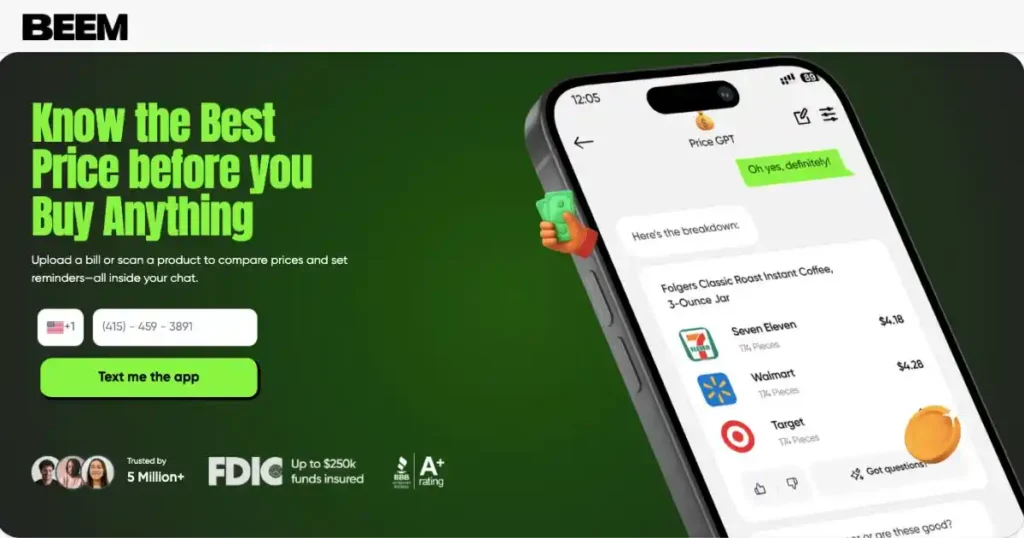
PriceGPT helps users compare product prices across stores by scanning receipts, uploading product information, or pasting product links. Instead of reacting to financing offers, users see where the true price stands across sellers before deciding how to pay.
How PriceGPT Helps Compare BNPL and Upfront Costs Accurately?
Price decisions can be unclear when payment options change how prices are shown. This is where clear comparisons matter, especially before picking a payment method.
Comparing product prices across sellers before choosing BNPL.
BNPL options often show up only on higher-priced listings. This can hide better base prices elsewhere. PriceGPT compares sellers first and reveals when flexible payments come with inflated starting costs.
Evaluating Total Cost Instead of Monthly Payments
Instead of just focusing on small installments, PriceGPT highlights the full purchase amount. This helps keep decisions grounded in what is actually paid over time, not just what seems manageable each month.
Learning from past BNPL purchases through receipt scanning
Receipt scanning consolidates past split payments. It demonstrates how minimal installments accumulate over months. This will make future decisions more informed and less based on short-term comfort.
Real-World Purchase Scenarios Where the Difference Matters
Payment choices have a small effect on the daily purchases. High prices are easier to divide into portions, and the actual effect will be realized later.
Electronics and High-Value Items
When divided, the price of the expensive electronics appears to be safer. It allows for bit-by-bit payments rather than a single large sum. A superior model seems to be justifiable, despite one up-front fee potentially triggering some reluctance.
Furniture, Appliances, and Home Essentials
Big home purchases rarely happen alone. A couch, a washer, and smaller essentials often end up on separate plans. Together, they put pressure on each other that is initially difficult to perceive.
Online Shopping and Impulse Purchases
Split payments make the checkout process lighter. This ease removes a natural pause, turning casual browsing into buying without much thought of the total cost.
Check this out: How PriceGPT Integrates with DealsGPT for Maximum Savings?
Psychological Effects of BNPL vs Upfront Payments
Money choices often become emotional. The way you pay affects the feelings during and after a purchase. Here is the difference between BNPL and upfront payments:
Reduced Pain of Paying and Higher Spend
Dividing a price into small payments will reduce the feeling of loss. This simplifies the process of authorizing purchases, and many people buy more expensive items without even knowing the actual price.
The Long-Term Stress of Ongoing Commitments
Small payments may seem harmless, but they can linger for months. This creates a mental distraction, as each payment competes with the others and disrupts financial peace.
PriceGPT vs BNPL App Interfaces
At a glance, both options appear helpful; however, they inform the decisions differently. This difference can be even clearer when we take a closer look at the purchasing process.
Transaction-Focused vs Cost-Focused Design
BNPL apps aim to make purchases easy. They highlight low installment amounts and quick approvals, making checkout feel lighter. Meanwhile, the total cost fades into the background during the final moments.
Decision Support Before Payment Commitment
PriceGPT steps in earlier. It provides price clarity and context before any payment is made. This helps buyers focus on value instead of speed or short-term comfort.
This contrast affects outcomes over time. One method eases the purchase moment, while the other encourages steadier, more confident decisions that buyers can support later.
When Can BNPL Make Sense With Price Awareness?
Buy now, pay later (BNPL) isn’t always a bad choice. It works well when you know the total cost and set clear limits. Price context is key here.
Planned Purchases With Predictable Cash Flow
BNPL is best for planned purchases with a steady income. You can manage scheduled payments without stress, missed bills, or pressure over time.
Using BNPL After Confirming the Best Price
After confirming the best price, BNPL becomes a payment option, not a pricing choice. This offers flexibility without falling for inflated costs hidden in smaller payments.
Long-Term Impact on Financial Health
Small payment choices add up. Over time, they shape our habits around spending, saving, and planning. This is how long-term financial health is built.
Avoiding Debt Creep from Split Payments
When payment details are clear, it’s easier to see how small amounts add up across different purchases and months. This visibility slows down accumulation and stops ongoing commitments from growing out of control.
Building Healthier Spending Confidence
Being aware of prices builds trust in decisions. Spending choices feel more intentional, which boosts confidence and helps maintain steady financial control.
Who Benefits Most From Using PriceGPT for BNPL Decisions?
PriceGPT supports people who regularly face payment options and want to avoid surprises. It’s handy when small installments can become bigger obligations.
- Online Shoppers Making Frequent Purchases
- Families Managing Shared Expenses
- Budget-Conscious Users Tracking Monthly Cash Flow
- Shoppers Prone to Impulse Buying
PriceGPT is perfect for those who value clarity over pressure. It keeps BNPL helpful and prevents small payments from becoming long-term stress.
Final Thoughts: The Cheapest Option Is the One You Fully Understand
BNPL isn’t automatically cheaper — and paying upfront isn’t automatically smarter. The real answer depends on price, timing, and your cash flow situation.
With PriceGPT, you start with the most important question: Am I paying the right price? By comparing live pricing before committing, you avoid inflated costs that can make installment plans more expensive than they appear.
Then, by using DealsGPT to uncover additional discounts and BudgetGPT to evaluate how a purchase fits into your monthly spending plan, you can confidently choose between paying upfront or splitting payments.
If timing is the only challenge — and you’ve found a genuinely good price — Beem’s Instant Cash Advance may offer short-term flexibility without stacking multiple BNPL obligations or risking late fees.
The smartest payment strategy isn’t about smaller installments — it’s about minimizing total cost.
Download the Beem app today from the Apple App Store or the Google Play Store and let PriceGPT help you choose the payment option that truly saves you more in the long run.
FAQs
Is BNPL always more expensive than paying upfront?
Not always. The final cost depends on pricing, fees, and behavior. Without comparison, BNPL can quietly become the more expensive choice.
How does PriceGPT help compare BNPL options?
PriceGPT compares base prices across sellers before financing is selected, ensuring BNPL is applied to competitive pricing.
Can PriceGPT track BNPL purchases over time?
Yes. Receipt scanning reveals how split payments accumulate, helping users understand long-term impact.
Does PriceGPT discourage BNPL usage?
No. PriceGPT remains neutral. It supports informed decisions rather than promoting or discouraging any payment method.
Is PriceGPT useful even if installment payments are preferred?
Yes. PriceGPT improves outcomes by ensuring the best price is selected first, regardless of payment structure.