

Table of Contents
In 2026, saving money online isn’t just about finding the lowest sticker price — it’s about navigating discounts, dynamic pricing, hidden fees, promotions, and the tools that help you uncover them. Two major approaches have emerged: coupon apps that hunt for promo codes and cash-back deals at checkout, and AI price comparison tools that analyze prices across retailers to show you the best place to buy — before you hit “Checkout.”
Traditional coupon apps automatically apply available codes and can earn rewards or cash back on purchases, making them a simple way to shave savings off your cart without extra effort. Meanwhile, AI-driven tools such as PriceGPT provide real-time price comparisons across multiple stores and highlight cheaper alternatives or price trends — helping you avoid overpaying in the first place.
Neither approach is universally “better,” but they work differently — and understanding those differences can help you save more depending on how you shop.
The Old Way: How Coupon Apps Work
Coupon apps used to be exciting. They promised quick discounts with just a few taps. Over time, students found they required more effort than expected and often failed when a deal was needed. These apps normally work in the following way:
- Traditional coupon apps collect social coupon codes available on the internet, submitted by the user, or even from a brand, and present them as discounts.
- The app cannot automatically apply the code when a person wants to shop, as he or she has to search, clip, or activate a code.
- Browser extensions test these codes at checkout, but success depends on whether the store still accepts them.
- Most coupon apps only work with certain retailers, so offers don’t apply to all the stores students use.
- Many codes expire quickly or have restrictions, leading to failed attempts and the familiar “invalid code” message at checkout.
These steps explain why coupon apps feel outdated. They depend on old code lists, require heavy manual effort, and yield unpredictable results.
The New Standard: What PriceGPT Brings to the Table
PriceGPT offers a smarter way to save money by using real pricing instead of unreliable coupon codes. Students love how easy it is to use and how quickly it provides accurate results. Here’s what PriceGPT offers:
- PriceGPT checks real-time prices at many stores, using AI to spot small price drops that coupon apps miss.
- There’s no need for coupon codes or promo links. Savings come from actual price differences, not conditional offers.
- Users will scan their receipts and upload products, and PriceGPT will instantly find lower prices and display clear comparisons within seconds.
- The AI can learn client preferences over time and determine which brands, categories, or products are most important to each student.
PriceGPT makes saving simple and predictable. Students get real prices, clear comparisons, and genuine savings without the guesswork.
Read: How PriceGPT Compares Everyday Prices So You Stop Overpaying Without Thinking About It
Feature Comparison: PriceGPT vs Coupon Apps
Below is a simple, clear comparison of the two tools.
| Feature | PriceGPT | Coupon Apps |
| Technology Used | AI-driven price analysis | Manual coupon database |
| Effort Required | Fully automatic | Requires user input |
| Accuracy | Real-time verified pricing | Often contains expired or invalid coupons |
| Savings Type | Direct price difference | Percentage or flat coupon-based discounts |
| Personalization | Learns from receipts and searches | Limited category-based recommendations |
| Supported Stores | Works across major online retailers | Limited partnerships |
| Frequency of Updates | Continuous live scanning | Depends on new coupon uploads |
PriceGPT works on real pricing data. Coupon apps depend heavily on coupon lists that may not keep up with modern shopping patterns. That single difference changes the savings outcome for most people.
How PriceGPT Finds More Reliable Savings
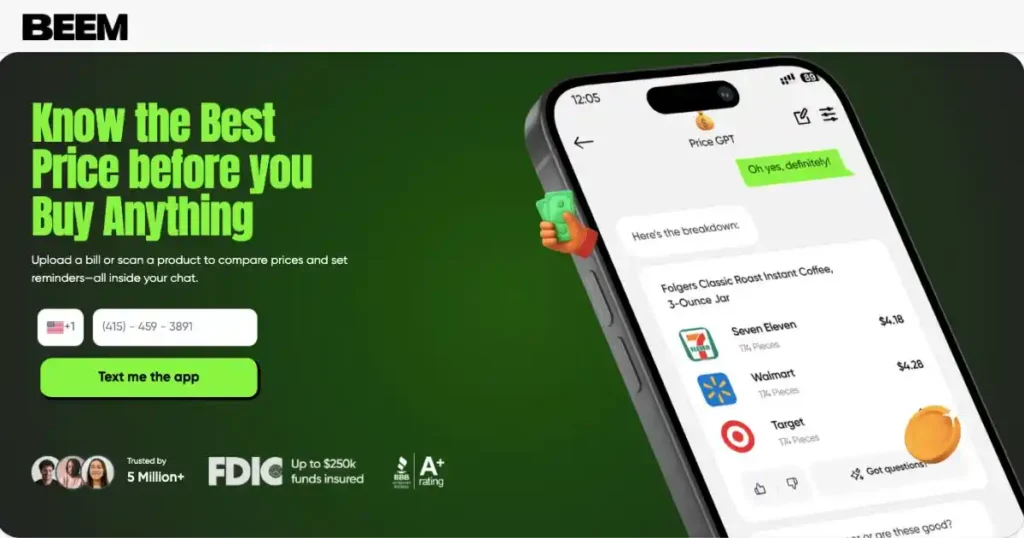
PriceGPT emphasizes real prices instead of unreliable coupon codes. This helps students find deals that truly work. Its tools run quietly in the background, offering clear and honest savings. There are no extra steps or frustration. Here’s how PriceGPT works:
Real-Time Price Tracking
PriceGPT tracks prices across several retailers at once. This gives users a live comparison rather than a slow or outdated one. Instead of waiting for a promo code to appear, the AI shows which store already has the lower price. The savings become more honest, not pushed by marketing.
Receipt Analysis for Missed Discounts
Users can scan receipts to uncover potential past savings. PriceGPT studies each purchase and checks whether another store offered the same item for less. It also uses this data to suggest smarter choices for future shopping trips. It’s like having a digital audit that helps users learn as they go.
Product Uploads and Instant Comparison
Shoppers can upload product images or paste links. PriceGPT compares the item across different retailers instantly. It highlights price differences that coupon apps cannot detect. Coupon apps stop working when there is no promo code. PriceGPT continues working with real data.
Why AI-Based Comparison Is the Future of Savings?

Automation is key to why AI-based savings tools shine. Users no longer have to search for coupons or test codes. The system gathers all the information, making it easier without losing results.
AI relies on verified pricing instead of public submissions from coupon users. This makes the results more dependable. With predictive tracking, AI sends alerts for upcoming sales based on past store activity. Shoppers can act at the right time rather than guess.
The biggest benefit is consistency. PriceGPT easily fits into daily or weekly shopping routines. It blends seamlessly with how people buy groceries, tech, or essentials.
Common Limitations of Coupon Apps
Coupon apps still carry drawbacks that frustrate many users. Some of those issues never changed, even after years of updates.
- Coupons often exclude popular items. Users try to apply the code and then find it does not work for the product they want.
- Some apps gather excessive information. Users trade privacy for access to deals, and not everyone feels comfortable with that exchange.
- Invalid codes remain one of the biggest issues. Nothing feels more disappointing than seeing a discount disappear at checkout.
Real-World Scenarios: Who Wins?
Real shopping moments show the differences better than charts. When students compare purchases with both tools, the gap between coupons and PriceGPT is clear. Here are some real-world examples:
Example 1: Grocery Shopping
Mary buys a 12-pack of Coca-Cola at Target for $8.49. Most of the time, the coupon apps do not provide good grocery deals, and most of the codes do not work at checkout. PriceGPT checks nearby stores and finds Walmart selling the same pack for $6.98. This clear price drop matters to students on a budget.
Example 2: Tech Product Purchase
Jake is interested in purchasing Apple AirPods Pro at a nearby electronics goods store for $249. The coupon app displays coupons, and none of them work in checkout. PriceGPT scans major retailers and finds Amazon selling the same AirPods Pro for $189. That’s a clear $60 difference, shown instantly without guesswork.
Example 3: Everyday Essentials
Sofia tries to find CeraVe Daily Moisturizing Lotion at CVS, where it costs approximately $15.99 (with small coupons). PriceGPT visits various stores and finds Costco, which sells a two-pack for $18.99. This option gives better value per ounce, making the choice easy and cost-effective.
Privacy and Security With PriceGPT
PriceGPT protects all uploaded data through encryption. Product uploads and receipt scans remain secure. No personal or financial information is stored. The AI uses only what it needs for comparisons and nothing more.
This transparency helps users trust the process. They know their data is not being sold or used for advertising. That confidence makes a huge difference when using a daily tool.
How to Use PriceGPT for Everyday Savings?
PriceGPT is an easy-to-use tool that can help students find better prices with nearly no additional effort. Follow these straightforward steps to save more:
- Open PriceGPT in the app or on the web dashboard.
- Upload a clear photo of a recent receipt. PriceGPT checks if another store sold the same item for less.
- Snap a picture of the product or its label. The tool compares that item across multiple retailers.
- Paste a product link from any online store. PriceGPT shows where the same item is cheaper.
- Each scan delivers a clean breakdown of price differences, so users see the best option in seconds.
Enable price alerts to catch sales and price drops early. Weekly scans reveal patterns and show the best time to buy. riceGPT operates silently in the background, simplifying and increasing the dependability of daily shopping.
The Verdict: Which Saves You More in 2026?
After comparing both methods, PriceGPT delivers more reliable savings. It does not rely on unpredictable coupon codes. It does not frustrate users with conditions or misleading offers. It scans real pricing across many stores and shows clear results.
Coupon apps are still effective in a few instances, yet their strength is declining. AI-powered solutions have become more robust, precise, and useful.
Check this out: How PriceGPT Integrates with DealsGPT for Maximum Savings?
FAQs
Can PriceGPT find coupon-based discounts, too?
Yes. If a coupon actually changes the price at a retailer, PriceGPT picks it up through its live price checks. It focuses on real savings, so any discount that affects the final cost is included automatically.
Does PriceGPT work with all major retailers?
PriceGPT supports most of the major retailers online and continues to add new retailers. This broad multiplication serves to make it easier to compare prices and even better deals without moving through several apps or websites.
How accurate is PriceGPT’s real-time pricing data?
PriceGPT scans active listings across stores, so its price data reflects what is available at that moment. The tool updates continuously, which helps shoppers avoid outdated information or misleading discount claims.
Is it safe to upload my product or receipt information?
Yes. All uploaded details are encrypted and used only for price comparison. No personal or financial data is saved in the system, and it provides users with a secure means to track their expenditure and seek superior offers.
Will coupon apps still be useful alongside AI tools?
Coupon apps can still help in rare cases where a promo code works, but their role is now limited. AI tools like PriceGPT offer broader, more reliable savings, so coupon apps become more of a small backup option.
Conclusion: Smart Shopping Starts With AI, Not Coupons
Coupon apps and AI price tools both save money — but in distinct ways:
Most Coupon apps automatically find and apply promo codes at checkout and often offer cashback or rewards. They’re useful when there are codes available, and you’re shopping on sites that support them. However, savings are limited by coupon availability, deal quality, and how well codes stack with existing offers.
AI price comparison tools, like PriceGPT, help you avoid paying too much before you shop by comparing prices across retailers, spotting price drops, and showing alternatives that fit your budget. Because they evaluate many sellers, they can uncover better deals even when no coupon exists.
In practice, many savvy shoppers combine both: start with a price comparison to find the lowest possible baseline price, then use coupon features or deal finders to stack discounts when available. And when you use tools like DealsGPT alongside PriceGPT, Beem helps surface broader savings opportunities — from discounts to promotions — without extra effort.
If you’re ready to save smarter on everyday purchases, download the Beem app from the Google Play Store or the Apple App Store and let AI handle the heavy lifting.