

Table of Contents
Financial awareness is often the difference between staying in control of your money and wondering where it all went at the end of the month.
The challenge is that spending decisions happen constantly. A grocery purchase here, a subscription renewal there, an impulse online order, a recurring bill, a restaurant meal, or a travel booking may seem insignificant on their own. But together, these transactions shape your financial health. Unfortunately, most people only review their spending after the money is already gone.
This is where real-time purchase insights powered by AI are changing personal finance.
Instead of waiting for monthly statements or budgeting reviews, AI can analyze spending activity as it happens. By monitoring transactions, identifying patterns, tracking recurring expenses, and evaluating purchase behavior in real time, AI helps consumers stay aware of their financial choices throughout the day—not weeks later.
This level of visibility allows users to recognize spending trends, detect unusual expenses, identify potential savings opportunities, and make adjustments before small habits become larger financial problems. Rather than simply reporting what happened, AI provides context that helps consumers understand the impact of their decisions as they occur.
The goal is not to monitor every dollar obsessively. It is to provide timely insights that help people make smarter choices, avoid unnecessary spending, and stay aligned with their financial goals.
With PriceGPT from Beem, users can receive real-time purchase insights that help them evaluate spending decisions, track price changes, and identify opportunities to save. Combined with BudgetGPT for budgeting guidance, JobsGPT for improving income opportunities, and DealsGPT for personalized savings recommendations, Beem helps users stay financially aware and make more confident decisions every day.
Why Real-Time Purchase Insights Matter?
The gap between spending and understanding is the biggest challenge for most people. You might swipe your card at multiple stores over a week, but you may not know which purchases were necessary or which ones pushed you off track.
By the time the monthly statement arrives, the damage is often already done.
Real-time insights close this gap instantly. You see what you spent, where it was spent, and how the transaction impacts your budget the moment it occurs.
These insights matter for several reasons:
They help prevent overspending
When people can see purchases as they happen, they can adjust future spending in the same week or even the same day. It becomes easier to stay within your budget because you always know your current standing.
They reveal trends early
Real-time data shows patterns as they form instead of months later. If takeout spending starts rising, if grocery bills get larger, or if subscription charges increase, AI highlights it right away. You can correct the trend before it becomes a habit.
They reduce financial stress
Unknowns cause anxiety. When your money feels unpredictable, financial decisions become harder and more emotional. Real-time insights bring clarity and help you feel in control.
They detect fraud fast
If a strange transaction appears, you see it immediately instead of discovering it weeks later. AI can also flag suspicious purchases based on your spending behavior.
They support better financial planning
When you always know where you stand, planning becomes easier. You can adjust budgets, redirect spending, and avoid errors that come from outdated information.
Read: How AI Helps You Simulate “What If” Scenarios Before Making Big Money Decisions
How AI Turns Purchases Into Instant Insights?
Artificial intelligence brings several capabilities together to generate real-time understanding. The process looks simple on the surface, but behind the scenes, AI performs a series of powerful tasks that make instant insights possible.
Transaction recognition and categorization
The moment a purchase is made, AI identifies the merchant, purpose, and category. It knows whether the purchase is a grocery run, a subscription renewal, a utility payment, or a discretionary spend.
This categorization is the foundation for budgets, comparisons, and trend analysis.
Contextual analysis
AI goes beyond labeling a transaction. It places the purchase in context by comparing it against:
- Your past spending
- Your current budget levels
- Your savings goals
- Market prices
- Known price patterns
For example, if your average grocery trip is near 90 dollars but this one was 150 dollars, AI recognizes that as an anomaly. If your streaming subscription normally renews at 11 dollars but jumps to 14 dollars, AI detects the change instantly.
Cross account detection
Most people use multiple payment methods. AI collects and interprets transactions across debit cards, credit cards, digital wallets, and bank accounts. This ensures nothing goes unnoticed, even if it is spread across different platforms.
Real-time calculation of budget impact
Every transaction affects your remaining budget. AI updates the numbers instantly. If you overspend in a category, the system shows it immediately instead of waiting until the end of the month.
Pattern recognition
AI learns your typical habits. It knows how often you order food, how you shop for groceries, which subscriptions renew monthly, and what your average transportation costs look like. When something changes, AI alerts you.
This learning ability is what makes insights personal and meaningful rather than generic.
Predictive recommendations
AI does not stop at analyzing what already happened. It predicts what might happen based on your behavior. If spending continues at the current pace, AI forecasts when you are likely to exceed your budget. If prices are rising for a specific item, AI helps you time purchases better.
Predictive capabilities transform reactive budgeting into proactive financial management.
Check this out: AI Insights for Gig Workers Balancing Multiple Income Streams and Irregular Checks
The Role of Real-Time Alerts
Alerts are the bridge between insights and action. They ensure you stay aware without constantly checking your app. A good system delivers alerts that are timely, helpful, and easy to understand.
You might receive alerts for:
- Large purchases
- Unusual spending spikes
- Budget category nearing its limit
- Duplicate charges
- Subscription renewals
- Price changes
- Potential savings opportunities
Instead of overwhelming you with notifications, AI tailors alerts based on what you care about. For example, if you are focused on reducing food delivery spending, the app will alert you each time your spending in that category climbs faster than expected.
This may interest you: How AI Can Help You Decide Between Saving, Paying Debt, or Spending Today
How Real-Time Insights Improve Spending Behavior?
Awareness drives better decisions, and real-time insights give you constant awareness. This leads to meaningful changes in how you spend.
You become more intentional
When you know a purchase is tracked instantly, you naturally become more thoughtful about it. You pause before buying something because you know it will influence your budget right away.
You stop overspending before it snowballs
By seeing transactions instantly, you can course correct quickly. One expensive shopping trip will not spiral into a habit because the impact shows up in real time.
You catch unnecessary charges
Many subscriptions renew without notice. Some fees appear without explanation. Real-time visibility helps you challenge these charges early.
You allocate money more effectively
Knowing exactly where your money is going allows you to shift priorities. You may decide to cut spending in one category to free up cash for another.
You build stronger financial habits
Consistency matters more than perfection. Small moments of awareness add up and help you build habits that stick for years.
Read: How Bill Reminders Prevent Late Fees and Stress?
How AI Enhances Financial Awareness Beyond Standard Tracking?
Traditional budgeting tools rely on manual input or delayed statement updates. AI powered systems create a richer, more dynamic experience.
Here is what AI adds that older tools never could.
Instant recognition of spending patterns
AI sees patterns unfold day by day. It notices when trends are forming instead of waiting until the monthly summary.
Insight into real behavior instead of assumptions
Most budgeting relies on guesses. AI does not guess. It observes your actual choices and gives you feedback based on real events.
Smarter categorization
Instead of relying on generic merchant codes, AI reads transaction descriptions and uses machine learning models to categorize accurately.
Real-time price comparisons
Some platforms integrate intelligent price analysis. When you make a purchase, AI checks whether the price is higher than average or if a better deal exists.
Personalized suggestions
AI recommendations are tailored to your spending style, preferences, and goals. This creates a more relevant experience that supports everyday decisions.
Check this out: How Purchase Intelligence Helps You Compare “Want” vs “Need” in Real Time
How Beem Uses Real-Time Purchase Insights to Keep Users Financially Aware?
Beem is one of the most advanced apps built around real-time purchase intelligence. Its system analyzes spending the moment it occurs and provides instant clarity. Every part of the platform works together to help users stay aware, save more, and avoid unnecessary expenses.
Here is how Beem uses AI to support financial awareness.
Beem’s Smart Wallet
The Smart Wallet processes purchases across all accounts and payment methods, then updates your category balances automatically. If spending rises too quickly in one area, the system alerts you so you can make adjustments.
PriceGPT
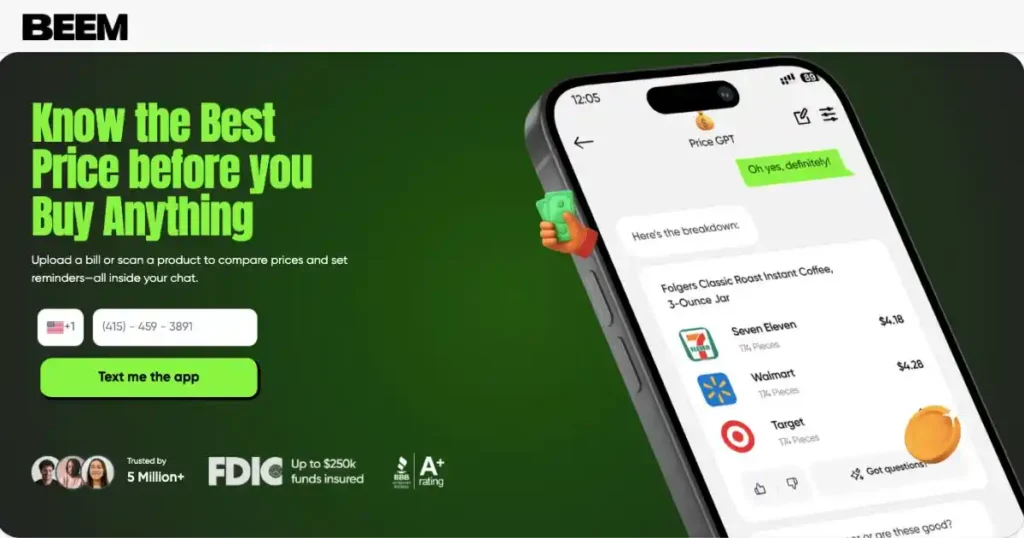
PriceGPT helps users understand whether a purchase is priced fairly. When you shop for products, it compares prices across brands and retailers and highlights when you might be paying more than necessary.
PriceGPT also tracks price patterns over time and forecasts potential drops, helping you save money in advance rather than after the fact.
DealsGPT
DealsGPT analyzes purchases and related products to find savings opportunities. If there are coupons, discounts, or rewards available, the tool notifies you in real time.
This prevents missed deals and supports smarter choices at checkout.
Subscription Monitoring
Subscriptions are one of the biggest causes of hidden overspending. Beem identifies subscription charges the moment they post and alerts you before renewals. If a subscription increases in price, Beem highlights the change instantly.
Wasteful Spending Detection
AI identifies purchases that do not align with your past habits or stated financial goals. This includes unnecessary fees, duplicate charges, or spending spikes that may have been accidental.
Budget GPT
This system uses real-time spending data to adjust your budget dynamically. If you overspend in groceries, Budget GPT helps rebalance your plan to stay on track. It also forecasts whether current spending levels will cause you to exceed your monthly limit.
Jobs GPT
Beem integrates Jobs GPT to help users close financial gaps by finding new work opportunities based on their profile, location, and skills. Real-time awareness of spending combined with income opportunities creates a complete financial management ecosystem.
The Impact of Real-Time Purchase Insights on Everyday Financial Life
People who use AI powered real-time insights often experience several positive changes.
Fewer surprise charges
Unexpected renewals, service fees, and merchant errors become easier to spot and resolve immediately.
Better alignment with goals
Whether the goal is saving more, reducing debt, or increasing emergency funds, real-time insights keep you aligned with the plan.
Less stress at month end
Instead of catching up on thirty days of spending, users remain aware the entire time. Month end becomes a quick review rather than a stressful analysis.
Smarter purchases
AI shows you where you overspend and offers better alternatives. This reduces financial waste.
Faster progress
Small daily improvements lead to major results. Real-time feedback accelerates progress toward financial stability.
Use Cases That Show the Power of Real-Time Insights
Real situations demonstrate why technology matters.
Catching a mistaken double charge
A user sees two identical charges for a restaurant within seconds. Instead of waiting weeks, they contact the merchant right away and get it corrected.
Avoiding a subscription price hike
A streaming service increases its fee. Real-time alerts highlight the change instantly, and the user switches to a cheaper plan the same day.
Staying on budget during the holidays
Spending often spikes during holidays. Real-time monitoring helps users track daily changes and adjust before overspending becomes overwhelming.
Detecting rising grocery costs
AI identifies that grocery trips have increased by thirty percent over the past two weeks. It recommends switching stores or buying alternative brands.
Improving meal delivery habits
A user sees that takeout has exceeded the monthly limit by the tenth day. Immediate awareness helps them shift to home cooking for the rest of the month.
Read: How to Slowly Move More of Your Financial Life Onto Autopilot With Confidence?
Why Real-Time Purchase Insights Are the Future of Money Management?
The future of personal finance hinges on visibility and automation. People no longer want to manage money manually. They want systems that understand their habits, update instantly, and give valuable guidance.
AI eliminates the guesswork. It ensures that financial decisions are based on the most recent information. It also helps users avoid common mistakes like late awareness of spending trends, missed opportunities to save, or unnoticed charges that quietly drain resources.
As inflation rises, prices fluctuate, and financial products evolve, real-time insights become essential. They allow people to react quickly and make informed choices.
AI is moving from a helpful tool to a necessary part of financial life.
How to Get the Most Out of Real-Time Purchase Insights?
If you want to benefit fully from AI powered insights, follow these practices.
Connect all accounts
The more data AI has, the more complete your financial picture becomes. Link bank accounts, credit cards, and digital wallets.
Set clear goals
Tell the system what matters to you. Whether it is saving for a trip, building an emergency fund, or reducing subscription costs, goals help AI personalize recommendations.
Respond to alerts
Alerts are meant to encourage action. If AI notices something unusual, take a moment to review it.
Review weekly summaries
Even with real-time insights, weekly check-ins keep you aligned with long-term goals.
Use predictive guidance
AI projections help you stay ahead. Review forecasts regularly to avoid unpleasant surprises.
Read: Why Every Smart Shopper Needs Purchase Intelligence?
Final Thoughts
Financial awareness is not about restricting spending—it is about understanding it.
The more visibility consumers have into their purchasing behavior, the easier it becomes to identify patterns, avoid wasteful spending, and make choices that support long-term financial goals. Real-time AI insights make this possible by transforming everyday transactions into actionable information.
Rather than discovering financial problems weeks or months later, users can identify opportunities and challenges as they emerge. Whether it’s a rising subscription cost, an unusual charge, a spending trend that exceeds expectations, or a chance to save on an upcoming purchase, AI helps keep financial decisions connected to real-time information.
Over time, this awareness can lead to stronger habits such as:
- More intentional spending
- Better budgeting consistency
- Faster detection of unnecessary expenses
- Improved purchase timing
- Greater confidence in financial decisions
- Stronger long-term financial discipline
The greatest benefit is that these insights become increasingly personalized as AI learns from spending behavior and adapts to individual financial goals.
With PriceGPT from Beem, users can turn real-time purchase data into meaningful financial guidance and smarter spending decisions. Paired with BudgetGPT for financial planning, JobsGPT for increasing earning potential, and DealsGPT for uncovering personalized savings opportunities, Beem empowers users to stay informed, stay proactive, and stay in control of their finances.
Download the Beem app today from the Apple App Store or the Google Play Store and discover how real-time purchase intelligence can help you build smarter habits, make better decisions, and achieve your financial goals with greater confidence.