

Table of Contents
Crypto marketing leans heavily on words like unstoppable, decentralized, and censorship-resistant. Those qualities are real in meaningful ways, but they create an impression that blockchain networks are immune to failure. They are not.
Networks go down. Transactions stall during periods of high demand. Governance disagreements within developer communities lead to permanent splits that divide users, liquidity, and attention between two competing versions of what used to be one chain. Smart contract exploits drain funds at the protocol level. These are not hypothetical edge cases. They have happened repeatedly across the most prominent blockchains in existence.
Understanding how these events work, what they have looked like historically, and how they affect the value of holdings is a basic part of responsible crypto investing that most introductory content skips entirely.
What Is a Blockchain Fork?
A fork happens when the rules governing a blockchain change. Because blockchains are maintained by a distributed network of nodes all running the same software, any change to that software requires coordination. When a change is proposed and implemented, the network either upgrades together or splits apart depending on whether all participants adopt the new rules.
The word fork comes from the visual image of a single path dividing into two. Before the change, everyone is on the same chain following the same rules. After a contested change, some nodes continue under the old rules while others adopt the new ones. If both groups keep mining or validating, the result is two separate chains sharing the same history up to the point of the split.
Forks happen for several reasons: protocol upgrades that improve efficiency or add features, security fixes that require rule changes, and governance disagreements where different factions within a community hold incompatible views about how the network should develop. Not all forks are contentious, and not all result in lasting splits. But understanding the two main types helps frame how significant any given fork is likely to be.
Soft Forks vs Hard Forks
A soft fork is a backward-compatible rule change. Nodes that have not upgraded to the new software can still participate in the network and recognize new blocks as valid. The network stays unified even if not every participant upgrades immediately. Bitcoin’s SegWit upgrade in 2017 is the most cited example. It changed how transaction data was structured to increase capacity, but nodes running older software could still function on the same chain. Soft forks are less disruptive because they do not force a choice between two incompatible versions of the network.
A hard fork is a non-backward-compatible change. Nodes running the old software will reject blocks produced under the new rules, and nodes running the new software will reject blocks produced under the old rules. If a significant portion of the network refuses to upgrade, the result is two separate chains running in parallel from the point of the split, each with its own version of the transaction history from that moment forward.
Hard forks are more consequential for investors because they can result in two separate coins, two separate communities, and two competing visions for what the project should become. They are the blockchain equivalent of a corporate spinoff, except that both resulting entities start with claims to the original brand and community, which creates confusion and conflict that can persist for years.
Read: Real-World Use Cases of Blockchain Beyond Cryptocurrency
Famous Hard Forks and What They Tell Us
Three historical forks illustrate the range of outcomes these events can produce.
The Bitcoin and Bitcoin Cash split in 2017 was one of the most contentious governance disputes in crypto history. The disagreement centered on block size: Bitcoin’s developers favored keeping blocks small and building scaling solutions on top of the base layer, while a faction led by several prominent figures argued for increasing the block size limit directly to handle more transactions. When consensus proved impossible, the block size faction forked the chain in August 2017, creating Bitcoin Cash. Both chains have continued to operate since then. Bitcoin went on to become the dominant store-of-value asset in crypto. Bitcoin Cash never achieved the adoption its proponents predicted and trades at a fraction of Bitcoin’s value. The fork revealed that brand recognition, developer talent, and network effects matter more than technical arguments alone in determining which chain survives a split.
The Ethereum and Ethereum Classic split in 2016 followed the DAO hack, in which an attacker exploited a vulnerability in a smart contract to drain roughly $60 million worth of Ether. The Ethereum community faced a fundamental philosophical question: should the blockchain be altered to reverse the hack and return funds to victims, or should the principle of immutability be honored even at the cost of the loss? The majority voted to implement a hard fork that effectively reversed the transactions. A minority rejected this intervention on principle and continued operating the original unaltered chain as Ethereum Classic. Ethereum went on to become the foundation of DeFi, NFTs, and much of the broader crypto ecosystem. Ethereum Classic continued as a minor chain. The fork established that even strongly held principles about immutability can be overridden by community consensus when the stakes are high enough.
The Ethereum Merge in 2022 showed that not all hard forks result in lasting splits. The transition from proof of work to proof of stake was arguably the largest technical change ever attempted on a live blockchain. Despite its scale, the upgrade was coordinated successfully with no meaningful competing chain emerging. The small proof-of-work fork that briefly appeared after the Merge faded quickly without significant adoption.
What Happens to Your Coins During a Hard Fork
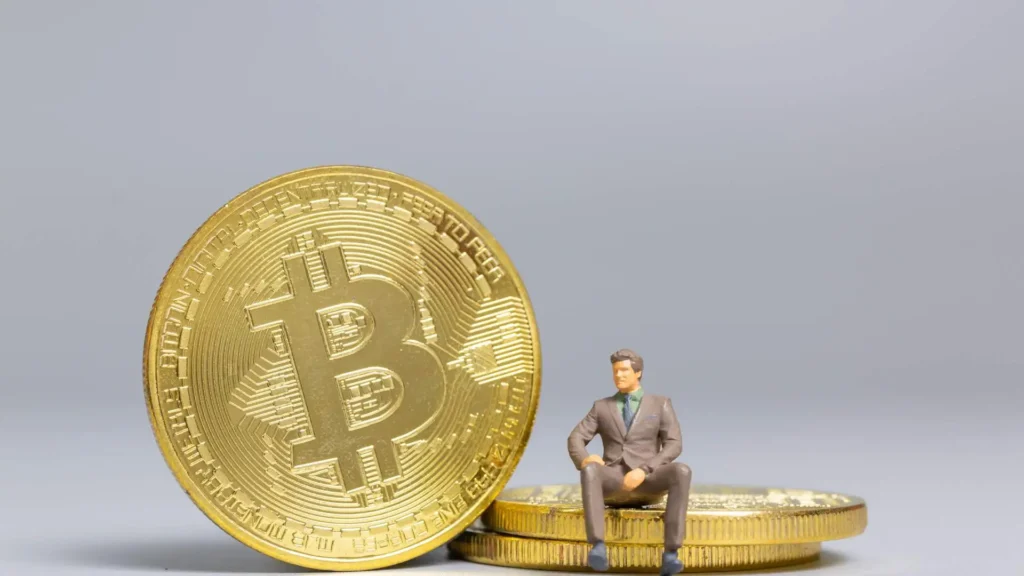
When a hard fork creates two chains, holders of the original coin typically receive an equal amount of the new chain’s coin. If you held one Bitcoin before the Bitcoin Cash fork, you received one Bitcoin Cash in addition to your original Bitcoin. The new coin appears in your wallet or on your exchange account at the moment of the split.
Whether you can actually access and use those new coins depends on your setup. If your crypto is held on an exchange, the exchange decides whether to support the new coin and credit it to your account. Major exchanges typically announce their fork support policies in advance. Some credit the new coin automatically. Others do not support it at all. If your crypto is in a self-custody wallet, you have more control but also more responsibility for safely accessing coins on the new chain without compromising your existing holdings.
The tax treatment matters and is often overlooked. The IRS treats coins received through a hard fork as ordinary income at the fair market value of the new coins on the date you receive them. If Bitcoin Cash was worth $300 when you received it and you held one coin, you had $300 of taxable income in that year regardless of whether you sold it. If you later sell those forked coins, any gain or loss from the receipt price creates an additional taxable event.
Not all forked coins have meaningful or lasting value. Most forks fade quickly as the community, development activity, and liquidity consolidate on the dominant chain. Receiving a forked coin does not mean you have received something worth holding indefinitely.
What Is a Blockchain Network Failure?
Network failures are distinct from forks and cover a range of events that disrupt normal blockchain operation without necessarily creating a permanent split.
Full outages occur when a network stops processing transactions entirely. Validators stop reaching consensus, blocks stop being produced, and users cannot send or receive funds until the issue is resolved and the network restarts. These events can last anywhere from minutes to many hours depending on the cause and how quickly the development team can coordinate a response.
Congestion is a softer failure mode. The network continues operating but becomes overwhelmed by demand, causing transaction fees to spike dramatically and processing times to slow to a crawl. Ethereum during the peak of the 2021 NFT boom saw gas fees climb to hundreds of dollars per transaction, effectively locking out smaller users from interacting with the network entirely.
Smart contract exploits are not network failures in the technical sense but function as failures from a user perspective. When a vulnerability in a deployed smart contract is exploited, funds can be drained in minutes. The network itself continues operating correctly; it is just executing code that does something its users did not intend.
Solana’s Outage History as a Case Study
Solana presents the clearest and most documented case study of a major blockchain experiencing repeated network failures. Between 2021 and 2023, Solana experienced multiple significant outages, some lasting over seventeen hours, caused by a combination of spam transactions overwhelming the network’s capacity and validator coordination failures.
The pattern revealed a fundamental design tradeoff. Solana was built for high throughput and low fees, achieving those goals by making architectural choices that sacrificed some of the decentralization and fault tolerance that slower networks like Bitcoin and Ethereum prioritize. The result is a faster and cheaper network under normal conditions that has proven more vulnerable to failure under stress.
Each outage created immediate selling pressure as users who depended on the network for DeFi operations, trading, or NFT activity found themselves unable to transact. Token price dropped during extended outages and recovered partially as service resumed. The longer-term impact was a persistent narrative around Solana’s reliability that affected institutional adoption decisions and developer confidence, regardless of the network’s technical performance improvements since then.
How Network Failures and Forks Affect Token Price
The price impact of both events follows recognizable patterns, though the magnitude varies significantly based on the severity and resolution.
Hard forks typically cause short-term volatility in both directions before and after the split. Anticipation of receiving a new coin sometimes drives buying pressure ahead of the fork date. After the split, price discovery for both chains creates uncertainty that often results in combined market cap lower than the original. Contentious forks that divide communities tend to weaken both resulting chains relative to what the original unified network might have become, because they divide developer talent, liquidity, and user attention.
Network outages create immediate selling pressure proportional to the severity and duration of the failure. Short outages on well-established networks tend to produce modest and quickly reversed price drops. Extended outages on networks with significant DeFi activity create real economic harm for users, which translates into lasting confidence damage that takes longer to repair than the technical issue itself.
What Investors Should Do When a Fork or Failure Happens
The most important first step in either situation is to resist the impulse to act immediately based on incomplete information:
- Verify information through official project channels before making any decisions. Discord announcements, official Twitter accounts, and developer GitHub updates are more reliable than social media speculation during rapidly developing situations.
- For forks: check whether your exchange has published a policy on supporting the new coin before moving funds. Moving crypto off an exchange immediately before a fork can result in missing the new coin distribution if the exchange was planning to credit it automatically.
- For outages: assess whether the failure appears temporary and technical or symptomatic of a deeper structural problem. A validator coordination bug is different from a fundamental design flaw revealed under load.
- Review your position size relative to what the event has revealed about the network’s risk profile. An outage that changes your assessment of a project’s reliability is relevant information for position sizing, independent of short-term price movement.
Conclusion
Blockchain networks are more robust than traditional financial infrastructure in certain ways and more fragile in others. Forks are a normal part of protocol evolution when they reflect coordinated upgrades and a source of lasting damage when they reflect irreconcilable community disagreement. Network outages reveal design tradeoffs that marketing rarely highlights. Understanding both gives investors a more accurate picture of what they own, how to respond when things go wrong, and what the risk profile of a given network actually looks like beyond its price chart.
Download Beem today from the App Store or Google Play. Staying informed and structured today can make finance management calmer and more predictable.
FAQs
What is a blockchain fork in simple terms?
A fork happens when the rules of a blockchain change. If all participants adopt the new rules, the network upgrades smoothly. If they do not, the chain splits into two separate networks each following different rules from the point of the split.
Do I get free coins when a hard fork happens?
Generally yes, if you hold coins before the fork you receive an equal amount of the new chain’s coin. Whether you can access them depends on how your coins are held and whether your exchange supports the fork. The IRS treats those coins as taxable income at fair market value when received.
Are blockchain outages common?
They vary significantly by network. Bitcoin and Ethereum have strong uptime records. Solana experienced multiple significant outages between 2021 and 2023. Outage frequency reflects underlying design choices about the tradeoff between performance and fault tolerance.
What happened to Bitcoin Cash after the fork?
Bitcoin Cash continued operating as a separate chain but never achieved the adoption its proponents predicted. It trades at a fraction of Bitcoin’s value and has a much smaller developer community, reflecting how network effects and developer talent concentrated on the original chain.
Should I sell my crypto when a fork is announced?
Not immediately and not based on the announcement alone. Gather information from official sources, understand what type of fork it is, check your exchange’s support policy, and assess the fork’s likely impact before making any decisions. Reacting to announcements without information usually produces worse outcomes than waiting for clarity.